



Episode 63 – Pediatric DKA
Pediatric DKA was identified as one of key diagnoses that we need to get better at managing in a massive national needs assessment conducted by the fine folks at TREKK – Translating Emergency Knowledge for Kids – one of EM Cases’ partners who’s mission is to improve the care of children in non-pediatric emergency departments across the country. You might be wondering - why was DKA singled out in this needs assessment? It turns out that kids who present to the ED in DKA without a known history of diabetes, can sometimes be tricky to diagnose, as they often present with vague symptoms. When a child does have a known history of diabetes, and the diagnosis of DKA is obvious, the challenge turns to managing severe, life-threatening DKA, so that we avoid the many potential complications of the DKA itself as well as the complications of treatment - cerebral edema being the big bad one. The approach to these patients has evolved over the years, even since I started practicing, from bolusing insulin and super aggressive fluid resuscitation to more gentle fluid management and delayed insulin drips, as examples. There are subtleties and controversies in the management of DKA when it comes to fluid management, correcting serum potassium and acidosis, preventing cerebral edema, as well as airway management for the really sick kids. In this episode we‘ll be asking our guest pediatric emergency medicine experts Dr. Sarah Reid, who you may remember from her powerhouse performance on our recent episodes on pediatric fever and sepsis, and Dr. Sarah Curtis, not only a pediatric emergency physician, but a prominent pediatric emergency researcher in Canada, about the key historical and examination pearls to help pick up this sometimes elusive diagnosis, what the value of serum ketones are in the diagnosis of DKA, how to assess the severity of DKA to guide management, how to avoid the dreaded cerebral edema that all too often complicates DKA, how to best adjust fluids and insulin during treatment, which kids can go home, which kids can go to the floor and which kids need to be transferred to a Pediatric ICU.
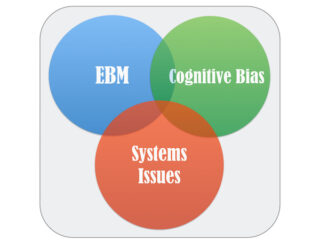
Episode 62 Diagnostic Decision Making in Emergency Medicine
This is Part 1 of EM Cases' series on Diagnostic Decision Making with Walter Himmel, Chris Hicks and David Dushenski discussing the intersection of evidence-based medicine, cognitive bias and systems issues to effect our diagnostic decision making in Emergency Medicine. In this episode we first discuss 5 strategies to help you master evidence-based diagnostic decision making to minimize diagnostic error, avoid over-testing and improve patient care including: 1. The incorporation of patients' values and clinical expertise into evidence-based decisions 2. Critically appraising diagnostic studies 3. Understanding that diagnostic tests are not perfect 4. Using the concept of test threshold to guide work-ups 5. Understanding that the predictive value of a test depends on the prevalence of disease We then go on to review some of the factors that play into the clinician’s and patient’s risk tolerance in a given clinical encounter, how this plays into shared decision making and the need to adjust our risk tolerance in critical situations. Finally, we present some strategies to prevent over-testing while improving patient care, patient flow and ethical practice.

Episode 61 Whistler’s Update in EM Conference 2015 Highlights Part 1
This EM Cases episode is Part 1 of The Highlights of The University of Toronto, Divisions of Emergency Medicine, Update in EM Conference from Whistler 2015 with Paul Hannam on Pearls and Pitfalls of Intraosseus Line Placement, Anil Chopra on who is at risk and how to prevent Contrast Induced Nephropathy, and Joel Yaphe on the Best of EM Literature from 2014, including reduction of TMJ dislocations, the TRISS trial (on transfusion threshold in sepsis), PEITHO study for thrombolysis in submassive PE, Co-trimoxazole and Sudden Death in Patients Receiving ACE inhibitors or ARBs, the effectiveness and safety of outpatient Tetracaine for corneal abraisons, chronic effects of shift work on cognition and much more...
Episode 60: Emergency Management of Hyponatremia
In this EM Cases episode Dr. Melanie Baimel and Dr. Ed Etchells discuss a simple and practical step-wise approach to the emergency management of hyponatremia: 1. Assess and treat neurologic emergencies related to hyponatremia with hypertonic saline 2. Defend the intravascular volume 3. Prevent further exacerbation of hyponatremia 4. Prevent rapid overcorrection 5. Ascertain a cause Dr. Etchells and Dr. Baimel answer questions such as: What are the indications for giving DDAVP in the emergency management of hyponatremia? What is a simple and practical approach to determining the cause of hyponatremia in the ED? How fast should we aim to correct hyponatremia? What is the best fluid for resuscitating the patient in shock who has a low serum sodium? Why is the management of the marathon runner with hyponatremia counter-intuitive? What strategies can we employ to minimize the risk of Osmotic Demyelination Syndrome (OSD) and cerebral edema in the emergency management of hyponatremia? and many more...

Episode 59b: Amy Plint on the Management of Bronchiolitis
In response to Episode 59 with Dr. Sanjay Mehta and Dr. Dennis Scolnik on the emergency department diagnosis and management of Bronchiolitis, Dr. Amy Plint, one of Canada's most prominent researchers in Bronchiolitis and the Chair of Pediatric Emergency Research Canada, tells her practical approach to choosing medications in the emergency department, the take home message from her landmark 2009 NEJM study on the use of nebulized epinephrine and dexamethasone for treating Bronchiolitis, and the future of Bronchiolitis research.

Episode 59: Bronchiolitis
This EM Cases episode is on the diagnosis and management of Bronchiolitis. Bronchiolitis is one of the most common diagnoses we make in both general and pediatric EDs, and like many pediatric illnesses, there’s a wide spectrum of severity of illness as well as a huge variation in practice in treating these children. Bronchiolitis rarely requires any work up yet a lot of resources are used unnecessarily. We need to know when to worry about these kids, as most of them will improve with simple interventions and can be discharged home, while a few will require complex care. Sometimes it’s difficult to predict which kids will do well and which kids won’t. Not only is it difficult to predict the course of illness in some of these children but the evidence for different treatment modalities for Bronchiolitis is all over the place, and I for one, find it very confusing. Then there’s the sphincter tightening really sick kid in severe respiratory distress who’s tiring with altered LOC. We need to be confident in managing these kids with severe disease. So, with the help of Dr. Dennis Scolnik, the clinical fellowship program director at Toronto’s only pediatric emergency department and Dr. Sanjay Mehta, an amazing educator who you might remember from his fantastic work on our Pediatric Ortho episode, we’ll sort through how to assess the child with respiratory illness, how to predict which kids might run into trouble, and what the best evidence-based management of these kids is.
