EM Cases emergency medicine education podcast

Best Case Ever 47 – Cyanotic Infant

In anticipation of EM Cases' upcoming episode, Congenital Heart Disease Emergencies we have Dr. Gary Joubert a double certified Pediatric EM and Pediatric Cardiology expert telling his Best Case Ever of a four month old infant who presents with intermittent cyanosis. The Cyanotic Infant can present a significant challenge to the EM provider as the differential is wide, ranging from benign causes such as GERD to life threatening heart disease that may present atypically in a well-appearing child. Dr. Joubert gives us some simple sweet clinical pearls to help us along the way...

Episode 83 – 5 Critical Care Controversies from SMACC Dublin

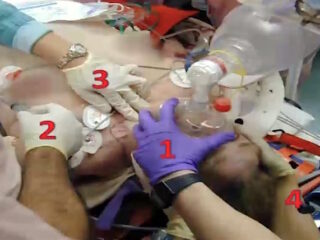
EM Cases Episode 83 - 5 Critical Care Controversies from SMACC Dublin: I had the great opportunity to gather some of the brightest minds in Emergency Medicine and Critical Care from around the world (Mark Forrest from U.K., Chris Nickson from Australia, Chris Hicks from Canada and Scott Weingart from U.S.) at the SMACC Dublin Conference and ask them about 5 Critical Care Controversies and concepts: How to best prepare your team for a resuscitation Optimum fluid management in sepsis Direct vs. video laryngoscopy as first line tool for endotracheal intubation Early vs. late trauma intubation Whether or not to attempt a thoracotomy in non-trauma centres The discussion that ensued was enlightening...

Best Case Ever 46 – Chris Nickson on Hickam’s Dictum

EM Cases Best Case Ever - Chris Nickson on Hickam's Dictum. Usually we use the heuristic of Occam's razor to help us arrive at one diagnosis that makes sense of all the data points that a particular patient presents to us. However sometimes it's not so straight forward and we need to think about multiple diagnoses that explain a patient's condition - Hickam's Dictum. Dr. Chris Nickson, the brains behind the Life in the Fast Lane blog tells his Best Case Ever from the SMACC Conference in Dublin, in which a patient thrombolysed for massive pulmonary embolism suffers a cardiac arrest, and the thought process he went through to discover the surprising complicating diagnoses that ensue...

Episode 82 – Emergency Radiology Controversies

EM Cases Episode 82 Emergency Radiology Controversies, pearls and pitfalls: Which patients with chest pain suspected of ACS require a CXR? What CXR findings do ED docs tend to miss? How should we workup solitary pulmonary nodules found on CXR or CT? Is the abdominal x-ray dead or are there still indications for it's use? Which x-ray views are preferred for detecting pneumoperitoneum? When should we consider ultrasound as a screening test instead of, or before, CT? What are the indications for contrast in abdominal and head CT? How should we manage the patient who has had a previous CT contrast reaction who really needs a CT with contrast? What is the truth about CT radiation for shared decision making? And much more...

Journal Jam 6 – Outpatient Topical Anesthetics for Corneal Abrasions

This is EM Cases Journal Jam Podcast 6 - Outpatient Topical Anesthetics for Corneal Abrasions. I’ve been told countless times by ophthalmologists and other colleagues NEVER to prescribe topical anesthetics for corneal abrasion patients, with the reason being largely theoretical - that tetracaine and the like will inhibit re-epithelialization and therefore delay epithelial healing as well as decrease corneal sensation, resulting in corneal ulcers. With prolonged use of outpatient topical anesthetics for corneal abrasions, corneal opacification could develop leading to decreased vision. Now this might be true for the tetracaine abuser who pours the stuff in their eye for weeks on end, but when we look at the literature for toxic effects of using topical anesthetics in the short term, there is no evidence for any clinically important detrimental outcomes. Should we ignore the dogma and use tetracaine anyway? Is there evidence that the use of topical anesthetics after corneal abrasions is safe and effective for pain control without adverse effects or delayed epithelial healing? To discuss the paper "The Safety of Topical Anesthetics in the Treatment of Corneal Abrasions: A Review" by Drs. Swaminathan, Otterness, Milne and Rezaie published in the Journal of Emergency Medicine in 2015, we have EM Cases’ Justin Morgenstern, a Toronto-based EM Doc, EBM enthusiast as well as the brains behind the First10EM blog and Salim Rezaie, Clinical Assistant Professor of EM and Internal Medicine at University of Texas Health Science Center at San Antonio as well as the Creator & Founder of the R.E.B.E.L. EM blog and REBELCast podcast. In this Journal Jam podcast, Dr. Morgenstern and Dr. Rezaie also discuss a simple approach to critically appraising a systematic review article, how to handle consultants who might not be aware of the literature and/or give you a hard time about your decisions and much more...

Journal Jam 5 One Hour Troponin to Rule Out and In MI

Traditionally we've run at least 2 troponins 6 or 8 hours apart to help rule out MI and recently in algorithms like the HEART score we've combined clinical data with a 2 or 3 hour delta troponin to help rule out MI. The paper we'll be discussing here is a multicentre/multinantional study from the Canadian Medical Association Journal from this year out of Switzerland entitled "Prospective validation of a 1 hour algorithm to rule out and rule in acute myocardial infarction using a high sensitivity cardian troponin T assay" with lead author Tobias Reichlin. It not only looks at whether or not we can rule out MI using a delta troponin at only 1 hour but whether or not we can expedite the ruling in of MI using this protocol.

Episode 73 Emergency Management of Pediatric Seizures

Pediatric seizures are common. So common that about 5% of all children will have a seizure by the time they’re 16 years old. If any of you have been parents of a child who suddenly starts seizing, you’ll know intimately how terrifying it can be. While most of the kids who present to the ED with a seizure will end up being diagnosed with a benign simple febrile seizure, some kids will suffer from complex febrile seizures, requiring some more thought, work-up and management, while others will have afebrile seizures which are a whole other kettle of fish. We need to know how to differentiate these entities, how to work-them up and how to manage them in the ED. At the other end of the spectrum of disease there is status epilepticus – a true emergency with a scary mortality rate - where you need to act fast and know your algorithms like the back of your hand. This topic was chosen based on a nation-wide needs assessment study conducted by TREKK (Translating Emergency Knowledge for Kids), a collaborator with EM Cases. With the help of two of Canada’s Pediatric Emergency Medicine seizure experts hand picked by TREKK, Dr. Lawrence Richer and Dr. Angelo Mikrogianakis, we’ll give you the all the tools you need to approach the child who presents to the ED with seizure with the utmost confidence.

Episode 72 ACLS Guidelines 2015 Post Arrest Care

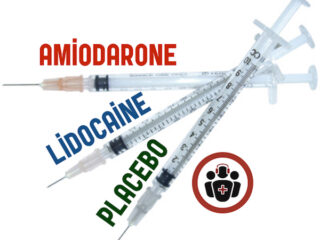
Once we've achieved ROSC our job is not over. Good post-arrest care involves maintaining blood pressure and cerebral perfusion, adequate sedation, cooling and preventing hyperthermia, considering antiarrhythmic medications, optimization of tissue oxygen delivery while avoiding hyperoxia, getting patients to PCI who need it, and looking for and treating the underlying cause. Dr. Lin and Dr. Morrison offer us their opinion on the new simplified approach to diagnosing the underlying cause of PEA arrests. We'll also discuss when it's time to terminate resuscitation or 'call the code' as well as some fascinating research on gender differences in cardiac arrest care. These co-authors of the guidelines will give us their vision of the future of cardiac arrest care and we'll wrap up the episode with a third opinion, so to speak: Dr. Weingart's take on the whole thing....

Episode 71 ACLS Guidelines 2015 – Cardiac Arrest Controversies Part 1

A lot has changed over the years when it comes to managing the adult in cardiac arrest. As a result, survival rates after cardiac arrest have risen steadily over the last decade. With the release of the 2015 American Heart Association ACLS Guidelines 2015 online on Oct 16th, while there aren’t a lot a big changes, there are many small but important changes we need to be aware of, and there still remains a lot of controversy. In light of knowing how to provide optimal cardio-cerebral resuscitation and improving patient outcomes, in this episode we’ll ask two Canadian co-authors of The Guidelines, Dr. Laurie Morrison and Dr. Steve Lin some of the most practice-changing and controversial questions.

Episode 70 End of Life Care in Emergency Medicine

Most of us in North America live in cultures that almost never talk about death and dying. And medical progress has led the way to a shift in the culture of dying, in which death has been medicalized. While most people wish to die at home, every decade has seen an increase in the proportion of deaths that occur in hospital. Death is often seen as a failure to keep people alive rather than a natural dignified end to life. This is at odds with what a lot of people actually want at the end of their lives: 70% of hospitalized Canadian elderly say they prefer comfort measures as apposed to life-prolonging treatment, yet as many as ⅔ of these patients are admitted to ICUs. Quality End of Life Care in Emergency Medicine is not widely taught. Most of us are not well prepared for death in our EDs – and we should be. There’s no second chance when it comes to a bad death like there is if you screw up a central line placement, so you need the skills to do it right the first time. To recognize when comfort measures and compassion are what will be best for our patients, is just as important as knowing when to intervene and treat aggressively in a resuscitation. Emergency physicians should be able to recognize not only the symptoms and patterns that are common in the last hours to days of life, but also understand the various trajectories over months or years toward death, if they’re going to provide the high quality end of life care that patients deserve. So, with the help of Dr. Howard Ovens, a veteran emergency physician with over 25 years of experience who speaks at national conferences on End of Life Care in Emergency Medicine, Dr. Paul Miller, an emergency physician who also runs a palliative care unit at McMaster University and Dr. Shona MacLachlan who led the palliative care stream at the CAEP conference in Edmonton this past June, we'll help you learn the skills you need to assess dying patients appropriately, communicate with their families effectively, manage end of life symptoms with confidence and much more...

Donate Subscribe
Go to Top