

In much of the Himalayas, access to basic healthcare is limited, seasonal, fragile, and sometimes absent altogether. Entire communities may be cut off for months at a time by snow, terrain, and distance. In these settings, preventable and manageable illness often progresses unchecked because care is out of reach.
To address this gap, in 2012 myself and several university colleagues from various educational backgrounds, including international development, law, medicine and finance, founded A Thousand Metres Above (ATMA), a nonprofit organization focused on delivering longitudinal and comprehensive primary care to remote Himalayan communities through locally led partnerships. With local headquarters in Ladakh in northern India, the work is grounded in prevention, chronic disease management, screening, and continuity and is built around returning to the same regions year after year alongside trusted local providers in ways that episodic mission care simply cannot deliver.
Although the camps themselves are centered on longitudinal primary care, there are meaningful areas of overlap with Emergency Medicine, including working with limited resources, evaluating undifferentiated complaints, and making pragmatic decisions when follow-up may be uncertain.
Why Ladakh?
Ladakh is a high-altitude desert in northern India, bordered by the Himalayan and Karakoram ranges between Pakistan and China. Many villages are accessible only during a narrow summer window when the snow melts and mountain passes open. Once winter sets in, roads close and entire valleys may be isolated for months at a time.
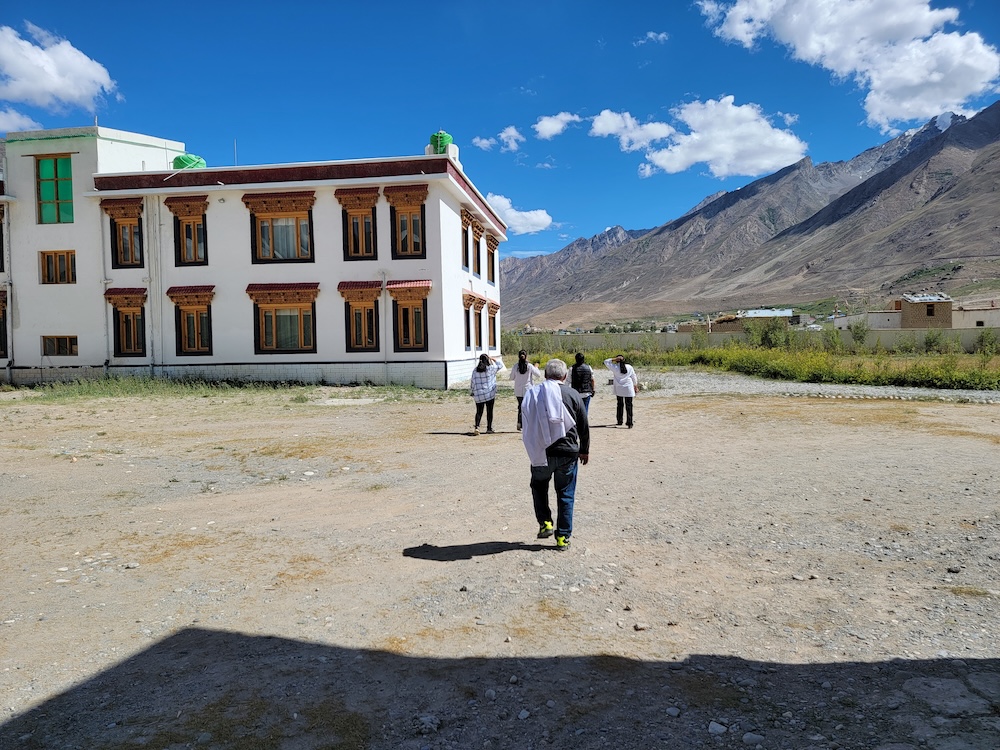
The medical consequences of this isolation are cumulative. Chronic conditions go undiagnosed or under-treated, medications run out without renewal, preventive care is inconsistent, and referral pathways are limited. During the winter months, access to emergency care is almost nonexistent outside of military air transport assistance. With roads closing seasonally, weather disrupting travel, and limited communication infrastructure, follow-up can’t be assumed. In places like Ladakh, sustained access to primary care often determines whether disease remains manageable or progresses unchecked.
Local Partnerships and Continuity
ATMA’s work is built on regional partnership. We work alongside local organizations and clinicians with a shared commitment to community health, combining local knowledge and leadership with additional resources and clinical support where helpful. The aim is to leverage the best of what we have available in both settings while keeping care culturally grounded and responsive to local needs.
In Ladakh, the guiding leadership has been provided by Dr. Tsering Norboo, a retired internal medicine physician and founder of the Ladakh Institute of Prevention (LIP). Dr. Norboo has spent decades delivering preventative and primary care to Ladakh’s most remote communities and is deeply trusted across the region. His work has been recognized nationally with the Padma Shri, one of India’s highest civilian honours.
Together, ATMA and LIP run recurring mobile medical camps across Ladakh, returning to the same communities year after year to prioritize continuity and relationship-based care.
How the Camps Function in Practice
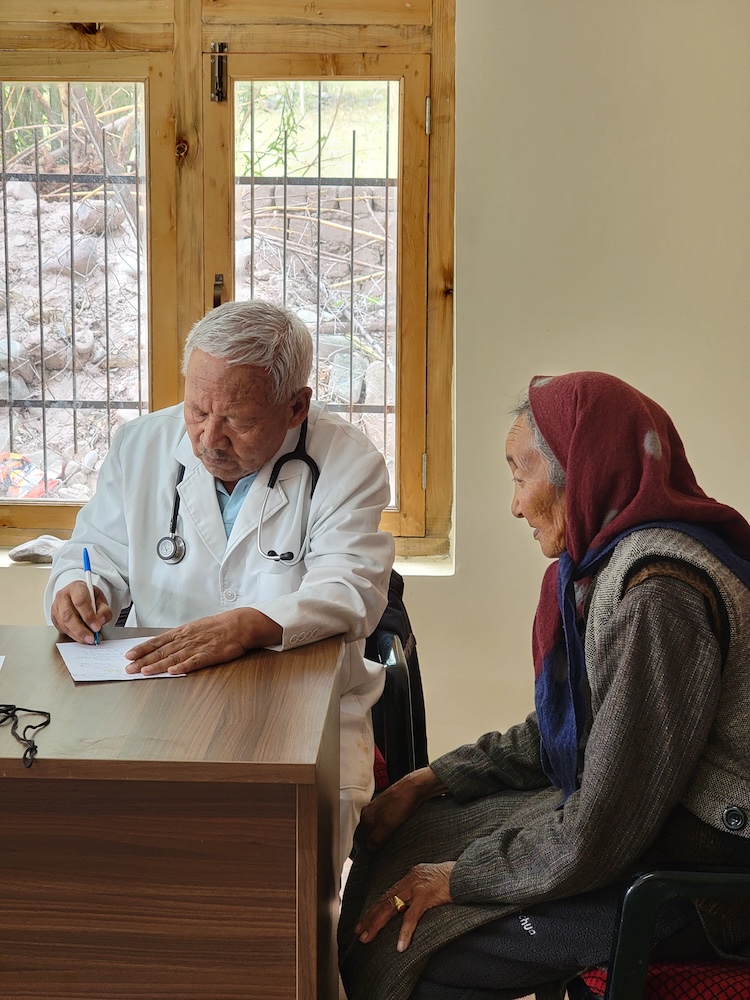
Each camp is planned months in advance around travel windows, staffing, and medical supplies. Clinics are typically set up in schools, monasteries, or community halls at altitude, often with limited infrastructure and variable power or heating. Patients begin arriving early, many after travelling long distances, and are registered and triaged by trained local assistants who record vital signs and help manage flow.
Physician assessments are led by Dr. Dr. Tsering Norboo in Ladakhi, which allows for detailed histories, culturally grounded counselling, and strong continuity of trust. Visits are intentionally comprehensive, with a primary care focus on screening, chronic disease management, medication review, and preventive care, recognizing that access may be infrequent.
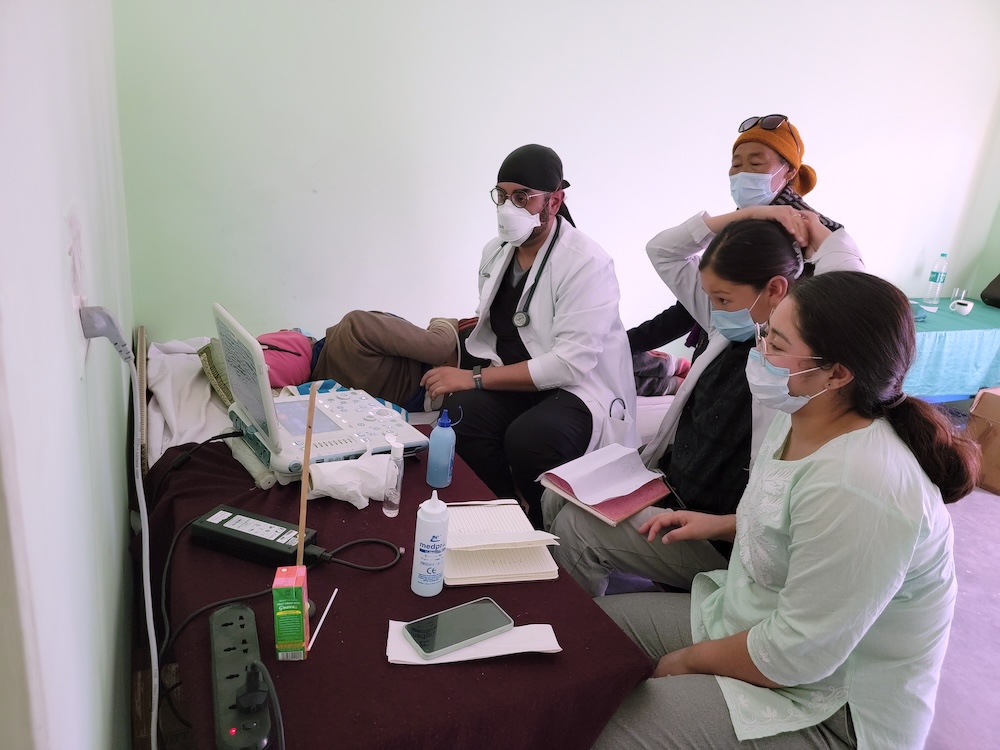
Diagnostic support includes targeted laboratory testing, ECG, spirometry, and point-of-care ultrasound, including focused cardiac and abdominal POCUS when it can meaningfully guide decisions. Medications are provided free of charge, with a travelling pharmacist overseeing dispensing and education, supported by LIP laboratory and clinical assistants who ensure continuity between camps.
Depending on location, a camp may see several dozen to nearly a hundred patients in a day. While urgent issues are sometimes managed, most encounters center on longitudinal primary care delivered through continued outreach. Each camp typically runs for 2-7 days, depending on the needs of the communities in that region.
Reflections on bringing medical care to the Himalayas
ATMA remains intentionally small and volunteer-run. All funds raised go directly to programming and local partners with the ATMA team covering all overhead expenses. Our focus is depth and continuity – returning to the same communities, strengthening trust, and supporting locally led care models that fit life at altitude.
Working with Dr. Dr. Tsering Norboo and the team in Ladakh has been life changing. Collaborating with him has been a highlight of both my career and my life over the past 14 years. When we laid the groundwork for ATMA in 2012, I was a 25-year-old graduate student and I never envisioned the organization would grow to have the impact it has, providing care to such remote regions. This journey has given me a greater appreciation for the health infrastructure we have at home, while also driving my passion for supporting primary and emergency care systems overseas. It is perhaps the most rewarding work I do. It has also influenced my own practice, particularly when working in rural Canada. When you don’t have immediate access to advanced diagnostics or labs, you have to rely heavily on your clinical exam, careful history-taking (and bedside tools like PoCUS) to guide decisions. It is its own challenge, but it keeps me sharp.
This year, we are filming a short documentary highlighting the remarkable legacy of our regional partner, Dr. Tsering Norboo, who has been providing care to patients across Ladakh for nearly 60 years. The film aims to document his life’s work and the enduring impact of locally led healthcare in high-altitude communities.
If you are interested in learning more about the work we do at A Thousand Metres Above, or if you would like to support these efforts through a donation, please visit www.athousandmetresabove.org.



Leave A Comment