

Most Recent
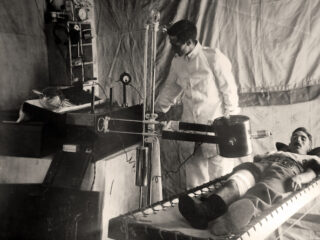
Episode 82 – Emergency Radiology Controversies
EM Cases Episode 82 Emergency Radiology Controversies, pearls and pitfalls: Which patients with chest pain suspected of ACS require a CXR? What CXR findings do ED docs tend to miss? How should we workup solitary pulmonary nodules found on CXR or CT? Is the abdominal x-ray dead or are there still indications for it's use? Which x-ray views are preferred for detecting pneumoperitoneum? When should we consider ultrasound as a screening test instead of, or before, CT? What are the indications for contrast in abdominal and head CT? How should we manage the patient who has had a previous CT contrast reaction who really needs a CT with contrast? What is the truth about CT radiation for shared decision making? And much more...
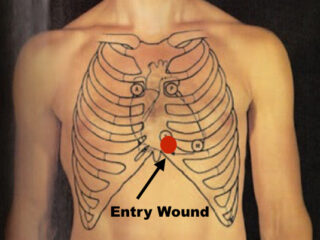
CritCases 3 – GSW to the Chest
EM Cases CritCases 3 - GSW to the chest in a rural setting. In this CritCases we discuss preparation for penetrating trauma in a rural setting, the ABC score, massive transfusion protocol, clamshell thoracotomy, trauma intubation and more. The Case... You are the transport physician on call. A 50-year old male with a history of depression allegedly shot himself in the chest with a rifle. A bystander called 911. The local paramedics are en route and the air transport team is activated with a plan to rendezvous at the nearest hospital, Janus General, which is 90 minutes by ground from the nearest tertiary care centre. You contact the rural hospital for a status update but all they can tell you is that his GCS is 14 and he has a GSW to the central chest.

Episode 81 – A Balanced View on Recent EM Literature with Joel Yaphe
EM Cases - A Balanced View on recent EM Literature with Joel Yaphe Being an optimist, I'm constantly searching for EM literature that will change my practice in a positive way and ultimately improve the care that I deliver. The past year was filled with promising papers, some of which received a lot of attention. I'm not the only one who is biased towards craving a positive paper - so are the researchers, the journal editors and the public. We all want our field to mightily move forward! Enter Dr. Joel Yaphe. An EM Residency Program Director at University of Toronto and an ED doc who I admire for his balanced, sensible and practical approach to appraising the literature. In this episode Dr. Yaphe, at University of Toronto's Update in EM Conference - Whistler, leads us through a few key articles from the past year including the REVERT trial to convert SVT, medical expulsive therapy for urolithiasis, steroids in anaphylaxis, and analgesics for low back pain, and discusses whether they should (or rather, should not) change our practice. He challenges authors' conclusions and questions whether the findings are relevant to our patients....
BEEM Cases 2 – Renal Colic Imaging, Analgesia, Fluids & Medical Expulsive Therapy
Urolithiasis is one of the more frequent diagnoses we are faced with in the Emergency Department, with an estimated 1 million ED visits due to renal colic. As such we are tasked with its diagnosis, prognosis and treatment. The following is a brief summation of the evidence regarding some of the most frequent questions encountered when diagnosing and managing urolithiasis. Four questions are answered by Rory Spiegel on this BEEM Cases. What is the optimal initial imaging modality for the diagnostic work-up of urolithiasis? Once the diagnosis of renal colic has been made what is the most efficacious analgesic strategy? Is there clinical utility to IV fluid administration in the management of renal colic? What is the use of medical expulsion therapy in the management of urolithiasis?

Best Case Ever 45 – Mike Winters on Cardiac Arrest
I had the great pleasure of meeting Dr. Mike Winters on his first ever visit to Canada at North York General's Emergency Medicine Update Conference, where he gave two fantastic presentations. His credentials are impressive: He is the Medical Director of the Emergency Department, Associate Professor in both EM and IM, EM-IM-Critical Care Program co-director and Residency Program Director of EM-IM at the University of Maryland in Baltimore. Sometimes we are so caught up with the job we need to get done during cardiac arrest that we forget about the important and profound effect that this event has on patients' families. On this Best Case Ever Dr. Winters tells the story of witnessing his grandfather's cardiac arrest, being present in the ED during the resuscitation attempts, and how that experience has coloured his practice. We discuss some pearls on communication with patients' families after death, colour-coded cardiac arrest teams and how to integrate POCUS into cardiac arrest care while minimizing chest compressions.
WTBS 8 – Succeeding With the Dirty Task of Hand Hygiene Promotion
Succeeding with the dirty task of hand hygiene promotion How many psychiatrists does it take to change a light bulb? The punch line to that old joke is, of course, “One—but the light bulb has to want to change.” But just as it’s tough to get patients to modify their behaviour (quit bad habits, take up good ones, comply with their meds, etc.), it’s also difficult for ED leaders to get their staff to alter their practices for the better. One example I find many EDs struggle with is improving hand hygiene. Despite what research has shown, some staff may believe they wash their hands plenty, thank you very much. Others may accept the evidence but struggle to remember to comply with hand hygiene guidelines, or competing priorities in a busy shift may get in the way of even the best of intentions. Access to a sink or supplies may be a problem when we provide care in hallways or waiting rooms; on the other hand, we may encounter patients stealing and drinking unsecured hand sanitizer. (Practice tip: If a patient becomes more intoxicated or less responsive after arrival in the ED, they may have consumed sanitizer.) In this month’s guest post, Dr. Mike Wansbrough, a colleague of mine at Mount Sinai Hospital in Toronto, Ontario, talks about his journey as our department’s “hand hygiene champion” (which means I was smart enough to delegate this thankless task to someone else—thanks, Mike!). Mike is a creative guy, so when he faced frustrations in trying to change the “light bulbs” that are my medical staff, he thought an online movie in this era of YouTube sensations might help. A link to the short film is provided below; the content has been researched and vetted by infection control experts and is only four minutes long. You are welcome to use it if it helps with your own hand hygiene efforts. I plan to make it mandatory viewing for our staff. Do you have other tips, suggestions, or resources on this issue to share? Please share them in our comments section so we can all learn from each other!
