

Most Recent

BCE 63 Failing Up after Medical Error
Dr. Sarah Gray tells us the story of her worst case ever and what she learned from it. About 50% of North American physicians involved in a serious medical error report increased anxiety for future errors, decreased confidence in their job, decreased job satisfaction, insomnia, PTSD, panic disorder – the list goes on. Dr. Gray shares how and why many of us react to medical error - the embarrassment, the shame, the guilt and sense of failure. She then explains the notion of acceptance that we all fail, that perfection is a myth, and how she learned that "failing up" after of the most difficult case of her career is the best choice after making a medical error...
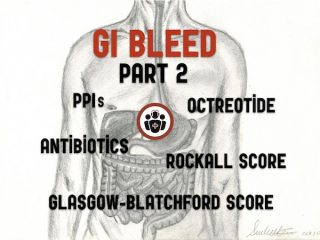
Episode 102 GI Bleed Emergencies Part 2
In Part 2 of our two part podcast on GI Bleed Emergencies Anand Swaminathan and Salim Rezaie kick off with a discussion on the evidence for benefit of various medications in ED patients with upper GI bleed. PPIs, somatostatin analogues such as Octreotide, antibiotic prophylaxis and prokinetics have varying degrees of benefit, and we should know which ones to prioritize. We then discuss the usefulness of the Glasgow-Blatchford and Rockall scores for risk stratification and disposition of patient with upper GI bleeds and hit it home with putting it all together in a practical algorithm. Enjoy!
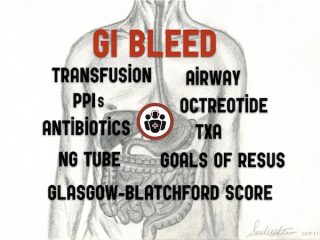
Episode 101 GI Bleed Emergencies Part 1
In this Part 1 of our two part podcast on GI bleed emergencies we answer questions such as: How do you distinguish between an upper vs lower GI bleed when it's not so obvious clinically? What alterations to airway management are necessary for the GI bleed patient? What do we need to know about the value of fecal occult blood in determining whether or not a patient has a GI bleed? Which patients require red cell transfusions? Massive transfusion? Why is it important to get a fibrinogen level in the sick GI bleed patient? What are the goals of resuscitation in a massive GI bleed? What's the evidence for using an NG tube for diagnosis and management of upper GI bleeds? In which patients should we give tranexamic acid and which patients should we avoid it in? How are the indications for massive transfusion in GI bleed different to the trauma patient? What are your options if the bleeding can't be stopped on endoscopy? and many more...

Best Case Ever 62 Penetrating Upper Airway Injury Awake Intubation Do’s & Don’ts
If you were faced with stab wound to the neck and had to act fast, would you have a well-thought out plan that you are comfortable with? In this EM Cases Best Case Ever podcast we discuss the do's and don'ts of penetrating upper airway injury awake intubation with airway expert George Kovacs....
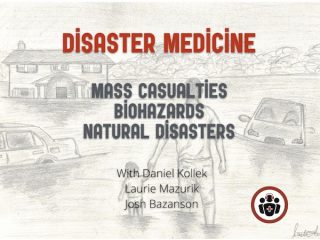
Episode 100 Disaster Medicine
As ED docs we’re particularly well suited to take a lead in disaster medicine. We own this. In this EM Cases podcast, with the help of Laurie Mazurik, Daniel Kollek and Joshua Bezanson we will help you become familiar with a general approach to mass casualties, how to handle critical infrastructure disruption in your ED, management of biohazards including airway management, chemical hazards including decontamination and finally evacuation principles in the case of a natural disaster...

Best Case Ever 61 Biohazard Preparedness: The Protected Code Blue
In anticipation of EM Cases Main Episode 100 on Disaster Medicine with Laurie Mazurik, David Kollek and Joshua Bezanson, Dr. Mazurik tells of her experience as a disaster medicine leader with keeping health care workers safe during the SARS era. If you were faced with a patient with suspected Ebola or drug resistant TB or any other biohazard patient who required intubation, would you know how to handle the situation so that you and your colleagues were safe...
