

Most Recent

WTBS 10 – EM Quality Assurance Part 2: Individual Responsibilities
Last month in introducing part one of our guest blog on quality assurance I told a story about a missed opportunity with follow-up care. This month I’d like to share a story with a happier ending. Recently, a patient presented at our emergency department (ED) with a non-specific fever. After discharge the patient’s blood cultures were reported positive, but attempts to reach this person over the ensuing 36 hours at the contact numbers provided were unsuccessful. An enterprising colleague googled the patient and found contact information online that eventually led to a call to the patient in a hotel room in another city, but when reached the patient was ill and confused...

Best Case Ever 50 – Delirium Tremens
In anticipation of EM Cases Episode 87 on Alcohol Withdrawal Dr. Sara Gray describes her Best Case Ever of severe alcohol withdrawal and Delirium Tremens from Janus General. Also on this podcast Dr. Anand Swaminathan reacts to Episode 86 Emergency Management of Hyperkalemia and discusses the use of calcium in the setting of digoxin toxicity. Early recognition and treatment of Delirium Tremens - a rapid onset of severe alcohol withdrawal accompanied by delirium and autonomic instability about 3-10 days after the appearance of withdrawal symptoms - is key to preventing long term morbidity and mortality...

Episode 86 – Emergency Management of Hyperkalemia
This is 'A Nuanced Approach to Emergency Management of Hyperkalemia' on EM Cases. Of all the electrolyte emergencies, hyperkalemia is the one that has the greatest potential to lead to cardiac arrest. And so, early in my EM training I learned to get the patient on a monitor, ensure IV access, order up an ECG, bombard the patient with a cocktail of kayexalate, calcium, insulin, B-agonists, bicarb, fluids and furosemide, and get the patient admitted, maybe with some dialysis to boot. Little did I know that some of these therapies were based on theory alone while others were based on a few small poorly done studies. It turns out that some of these therapies may cause more harm than good, and that precisely when and how to give these therapies to optimize patient outcomes is still not really known...

WTBS 9 – EM Quality Assurance Part One: Improving Follow up from the ED
This is Waiting to Be Seen 9 on EM Cases - Improving Follow up From the ED, Quality Assurance Part 1. We all face the challenge of how to manage final reports that arrive after the patient has been admitted or discharged, but some EDs are more organized and diligent than others in systematically addressing their obligations in this area. In this two-part guest blog, Dr. Lucas Chartier, an emergency physician in Toronto, will discuss best practices in departmental organization in part one and the obligations of the individual physician in part two. No ED will ever be perfect, but there are some positive lessons to share and we likely all can do better in reducing risks related to test result follow-up.

BEEM Cases 3 – Acute Respiratory Failure: NIPPV & POCUS
Shortness of breath is a very common chief complaint in the emergency department, but despite our familiarity with this symptom, management is not always straightforward. The differential diagnosis is extensive, including the common cardiorespiratory conditions, but extending to toxicologic, hematologic, neuromuscular, metabolic, and psychiatric causes. Over the past decade, we have seen the widespread adoption of new technologies to help us manage these patients. This post will look at some new evidence on two of those technologies: noninvasive positive pressure ventilation (NIPPV) and ultrasound (POCUS). We will answer 3 questions based on 3 systematic reviews using the BEEM critical appraisal framework...
Best Case Ever 49 – Post-Arrest Hyperkalemia
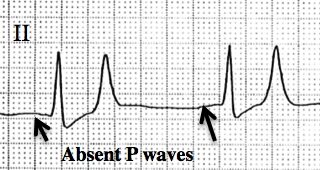
Melanie Baimel's Best Case Ever on Post-Arrest Hyperkalemia on EM Cases. Post arrest patients can sometimes be challenging. We need to think of a variety of underlying causes of the arrest, antiarrhythmics, possible cath lab activation, targeted temperature management, sedation and more. To add to this, many post arrest patients do not have ideal vital signs that require attention. In this Best Case Ever, in anticipation of our upcoming episode on A Rational Approach to Hyperkalemia Dr. Melanie Baimel describes a post arrest patient who remains bradycardic and hypotensive despite multiple pressors....
