

Most Recent

Best Case Ever 47 – Cyanotic Infant
In anticipation of EM Cases' upcoming episode, Congenital Heart Disease Emergencies we have Dr. Gary Joubert a double certified Pediatric EM and Pediatric Cardiology expert telling his Best Case Ever of a four month old infant who presents with intermittent cyanosis. The Cyanotic Infant can present a significant challenge to the EM provider as the differential is wide, ranging from benign causes such as GERD to life threatening heart disease that may present atypically in a well-appearing child. Dr. Joubert gives us some simple sweet clinical pearls to help us along the way...
Episode 83 – 5 Critical Care Controversies from SMACC Dublin
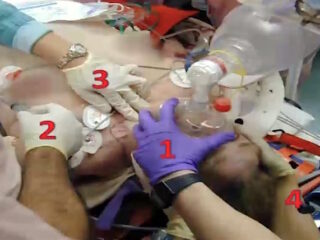
EM Cases Episode 83 - 5 Critical Care Controversies from SMACC Dublin: I had the great opportunity to gather some of the brightest minds in Emergency Medicine and Critical Care from around the world (Mark Forrest from U.K., Chris Nickson from Australia, Chris Hicks from Canada and Scott Weingart from U.S.) at the SMACC Dublin Conference and ask them about 5 Critical Care Controversies and concepts: How to best prepare your team for a resuscitation Optimum fluid management in sepsis Direct vs. video laryngoscopy as first line tool for endotracheal intubation Early vs. late trauma intubation Whether or not to attempt a thoracotomy in non-trauma centres The discussion that ensued was enlightening...

Best Case Ever 46 – Chris Nickson on Hickam’s Dictum
EM Cases Best Case Ever - Chris Nickson on Hickam's Dictum. Usually we use the heuristic of Occam's razor to help us arrive at one diagnosis that makes sense of all the data points that a particular patient presents to us. However sometimes it's not so straight forward and we need to think about multiple diagnoses that explain a patient's condition - Hickam's Dictum. Dr. Chris Nickson, the brains behind the Life in the Fast Lane blog tells his Best Case Ever from the SMACC Conference in Dublin, in which a patient thrombolysed for massive pulmonary embolism suffers a cardiac arrest, and the thought process he went through to discover the surprising complicating diagnoses that ensue...
Episode 82 – Emergency Radiology Controversies
EM Cases Episode 82 Emergency Radiology Controversies, pearls and pitfalls: Which patients with chest pain suspected of ACS require a CXR? What CXR findings do ED docs tend to miss? How should we workup solitary pulmonary nodules found on CXR or CT? Is the abdominal x-ray dead or are there still indications for it's use? Which x-ray views are preferred for detecting pneumoperitoneum? When should we consider ultrasound as a screening test instead of, or before, CT? What are the indications for contrast in abdominal and head CT? How should we manage the patient who has had a previous CT contrast reaction who really needs a CT with contrast? What is the truth about CT radiation for shared decision making? And much more...
CritCases 3 – GSW to the Chest
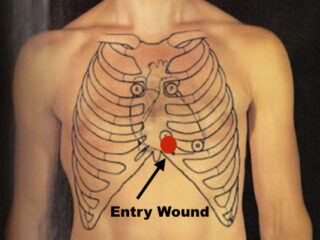
EM Cases CritCases 3 - GSW to the chest in a rural setting. In this CritCases we discuss preparation for penetrating trauma in a rural setting, the ABC score, massive transfusion protocol, clamshell thoracotomy, trauma intubation and more. The Case... You are the transport physician on call. A 50-year old male with a history of depression allegedly shot himself in the chest with a rifle. A bystander called 911. The local paramedics are en route and the air transport team is activated with a plan to rendezvous at the nearest hospital, Janus General, which is 90 minutes by ground from the nearest tertiary care centre. You contact the rural hospital for a status update but all they can tell you is that his GCS is 14 and he has a GSW to the central chest.

Episode 81 – A Balanced View on Recent EM Literature with Joel Yaphe
EM Cases - A Balanced View on recent EM Literature with Joel Yaphe Being an optimist, I'm constantly searching for EM literature that will change my practice in a positive way and ultimately improve the care that I deliver. The past year was filled with promising papers, some of which received a lot of attention. I'm not the only one who is biased towards craving a positive paper - so are the researchers, the journal editors and the public. We all want our field to mightily move forward! Enter Dr. Joel Yaphe. An EM Residency Program Director at University of Toronto and an ED doc who I admire for his balanced, sensible and practical approach to appraising the literature. In this episode Dr. Yaphe, at University of Toronto's Update in EM Conference - Whistler, leads us through a few key articles from the past year including the REVERT trial to convert SVT, medical expulsive therapy for urolithiasis, steroids in anaphylaxis, and analgesics for low back pain, and discusses whether they should (or rather, should not) change our practice. He challenges authors' conclusions and questions whether the findings are relevant to our patients....
