

Ep 213 Update in Management of Status Epilepticus

Convulsive status epilepticus is one of the most morbid neurologic emergencies we manage in the ED, and outcomes depend far more on speed than drug selection. Like ventricular fibrillation, each minute of ongoing convulsions worsens hypoxia, acidosis, cardiovascular instability, and neuronal injury, while making seizures progressively harder to terminate. Modern definitions are intentionally time-compressed to force early, parallel, clock-anchored action. Any patient still convulsing when you reach the bedside should be treated as evolving status epilepticus. In this EM Cases podcast with Dr. Sara Gray, we take a practical, time-based approach to convulsive status epilepticus, focusing on early, adequately dosed benzodiazepines, avoiding common escalation and dosing pitfalls, anticipating post-ictal cardiovascular collapse, and knowing when to escalate to second-line agents, airway control, and anesthetic-dose therapy. We also address the transition to non-convulsive status epilepticus and how to recognize ongoing seizures when EEG is not immediately available. We answer questions such as: Why does time to first benzodiazepine matter more than the drug or route? What critical actions should occur in parallel with the first dose? What are 3 key actions to do in parallel with the first benzodiazepine? Why is underdosing second-line antiseizure medications—especially levetiracetam—a common and dangerous pitfall? When should persistent seizures trigger intubation and anesthetic-dose therapy? How can we identify non-convulsive status epilepticus once tonic-clonic activity stops? And many more (we also include a high yield status epilepticus management algorithm in the show notes!)... If you find EM Cases helpful in your clinical practice, please consider supporting our work so we can continue producing free, high-quality emergency medicine education for clinicians around the world. Make a donation here: https://emergencymedicinecases.com/donation/
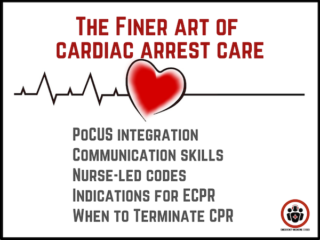
Ep 170 Cardiac Arrest – PoCUS Integration, Communication Strategies, E-CPR, Calling the Code

In this part 2 of our 2-part podcast series on Cardiac Arrest - The When, Why & How, we discuss some of the finer art of cardiac arrest care and answer questions such as: how should we best communicate to EMS, the ED team and the family of the patient to keep the team focused, garner the most important info and keep the flow of the code going? How should we integrate PoCUS into cardiac arrest care so we do not interrupt the core components, yet we gain valuable data? What are the indications for consideration of ECPR/ECMO in cardiac arrest? What factors need to be taken into consideration to decide on when to terminate resuscitation of the cardiac arrest patient - when to call the code? and many more...

Ep 122 Sepsis and Septic Shock – What Matters from EM Cases Course

In this podcast Dr. Sara Gray, intensivist and emergency physician, co-author of The CAEP Sepsis Guidelines, answers questions such as: How does one best recognize occult septic shock? How does SIRS, qSOFA and NEWS compare in predicting poor outcomes in septic patients? Which fluid and how much fluid is best for resuscitation of the septic shock patients? What are the indications for norepinephrine, and when in the resuscitation should it be given, in light of the CENSER trial? What are the goals of resuscitation in the patient with sepsis or septic shock? When should antibiotics administered, given that the latest Surviving Sepsis Campaign Guidelines recommend that antibiotics be administered within one hour of arrival for all patients suspected of sepsis or septic shock? What are the indications for a second vasopressor after norepinephrine? Given the conflicting evidence for steroids in sepsis, what are the indications for steroids? Should we be considering steroids with Vitamin C and thiamine for patients in septic shock? What are the pitfalls of lactate interpretation, and how do serial lactates compare to capillary refill in predicting poor outcomes in light of the ANDROMEDA trial? Is procalcitonin a valuable prognostic indicator in septic patients? and many more...

Ep 103 Preventing Burnout and Promoting Wellness in Emergency Medicine

Burnout – it’s the elephant in the room that we all know about but prefer not to discuss. Yet according to a 2013 Medscape survey, 40% of physicians reported burnout in U.S. In this episode, Sara Gray and Chris Trevelyan present an honest approach to preventing burnout and promoting wellness, outlining strategies both at the individual and systems levels. They explain why wellness matters, how you can strive to achieve it and how to recognize when you or a colleague are unwell so that you can get the help you need...

Donate Subscribe
Go to Top