

Most Recent
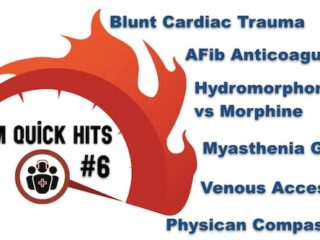
EM Quick Hits 6 Blunt Cardiac Trauma, Atrial Fibrillation Anticoagulation, Hydromorphone vs Morphine, Myasthenia Gravis, Venous Access
In this EM Quick Hits episode: Andrew Petrosoniak on diagnosis and risk stratification of blunt cardiac trauma, Clare Atzema on latest guidelines for anticoagulation in atrial fibrillation, Maria Ivankovic on hydromorphone vs morphine for acute pain, Brit Long on clinical pearls in the diagnosis of myasthenia gravis, Anand Swaminathan on venous access tips and tricks, and bonus material from EM Cases Course June 2018 with Walter Himmel and Barbara Tatham on Physician Compassion and tools to prevent burnout...
Rapid Reviews Video – Low and Slow Part 1: Calcium Channel Blocker and B-blocker Overdose
Dr. Nick Clarridge reviews the "low and slow" overdoses: calcium channel blocker and b-blocker toxicity recognition and management in this EM Cases Rapid Reviews Video...

Ep 127 EM Drugs that Work and Drugs that Don’t Part 2 – Antiemetics, Angioedema, Oxygen
In this Episode 127 Drugs that Work and Drugs that Don't Part 2 - Antiemetics, Angioedema and Oxygen, with Justin Morgenstern and Joel Lexchin we discuss the evidence for various antiemetics like metoclopramide, prochlorperazine, promethazine, droperidol, ondansetron, inhaled isopropyl alcohol and haloperidol as well as why should not use an antiemetic routinely with morphine in the ED. We then discuss the evidence for various drugs options for a potpourri of true emergencies like angioedema and hyperkalemia, and wrap it up with a discussion on oxygen therapy...

EM Cases Quiz Vault Launch!
The 800 question (and growing) Quiz Vault has been designed by a development team over the past year so that you can quickly and easily get test-enhanced learning at your fingertips for free. Build your own customized quiz by episode, by year and by medical field. Sign in once and you're ready to go. Quizzes on individual episodes can also be accessed at the bottom of the show notes for that particular episode with one click. You receive instant feedback for every multiple choice question you answer with a detailed explanation and your quiz scores are displayed for your eyes only compared to the community averages. Whether you're studying for an exam or need to brush up on Pediatric EM because your ED doesn't see many pediatric patient, or you just want to make sure you etch all the practice enhancing pearls from the EM Cases main episode podcasts, The Quiz Vault will help you on your path to b the best EM provider you can be!
Ep 126 EM Drugs That Work and Drugs That Don’t – Part 1: Analgesics
In this podcast we discuss the key concepts in assessing drug efficacy trials, and provide you with a bottom line recommendation for the use of gabapentinoids, NSAIDs and acetaminophen for low back pain and radicular symptoms, topical NSAIDs and cyclobenzaprine for sprains and strains, caffeine as an adjunct analgesic, why we should never prescribe tramadol, dexamethasone for pharyngitis, calcium channel blockers for hemorrhoids and anal fissures, buscopan for abdominal pain and renal colic and why morphine might be a better analgesic choice than hydromorphone...
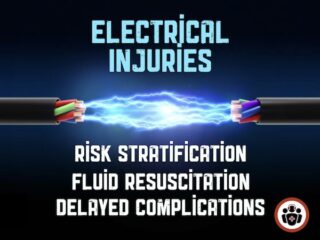
Ep 125 Electrical Injuries – The Tip of the Iceberg
Electrical injuries are rare, representing less than 1% of burn center admissions. So there is a paucity of robust evidence for the management of these patients. Nonetheless, in this podcast we’ll give you the tools to help risk stratify electrical injuries, give some guidance on fluid resuscitation, describe immediate management of acute complications and make you aware of the potential delayed complications that must be anticipated...
