

Most Recent

Best Case Ever 38 Sickle Cell Acute Chest Syndrome
Sickle Cell Acute Chest Syndrome remains the leading cause of death in patients suffering from Sickle Cell Disease. In his Best Case Ever, Dr. Richard Ward, a hematologist with a special interest in Sickle Cell Disease, describes a case of a Sickle Cell Disease patient who presents with what appears to be a simple pain crisis, but turns out to be a devastating Acute Chest Syndrome. He gives us the key clinical pearls and pitfalls to make this often elusive diagnosis early so that life-saving treatment can be initiated in a timely manner. This is in anticipation of the upcoming episode on The Emergency Management of Sickle Cell Pain Crisis with Dr. Ward and Dr. John Foote.

Journal Jam 4 – Low Dose Ketamine Analgesia
You’d think ketamine was in the ED drinking water! Not only has this NMDA receptor antagonist been used effectively for procedural sedation and rapid sequence intubation, but also, for delayed sequence intubation to buy time for pre-oxygenation, for life-threatening asthma as it has bronchodilatory and anxiolytic effects, for severely agitated psychiatric patients and excited delirium syndrome to dissociate them and get them under control; ketamine has even been used for refractory status epilepticus and for head injured patients as it is thought to have neuroprotective effects. The big question is: How effective is low dose ketamine analgesia for patients with moderate to severe pain in the ED as an adjunct to opiods? Low dose ketamine seems not only to help control pain, but it also has this almost magical effect of making patients indifferent to the pain. Pain is everywhere. And oligoanalgesia occurs in up to 43% of patients in EDs. Can we relieve suffering with low dose ketamine analgesia in the ED?....
Episode 67 Pediatric Pain Management
Pain is the most common reason for seeking health care. It accounts for 80% of ED visits. The WHO has declared that “optimal pain treatment is a human right”. As has been shown in multiple ED-based Pediatric pain management studies, Pediatric pain is all too often under-estimated and under-treated. Why does this matter? Under-estimating and under-treating pediatric pain may have not only short term detrimental effects but life-long detrimental effects as well; not to mention, screaming miserable children disturbing other patients in your ED and complaints to the hospital from parents. Whether it’s venipuncture, laceration repair, belly pain or reduction of a fracture we need to have the skills and knowledge to optimize efficient and effective pain management in all the kids we see in the ED. What are the indications for intranasal fentanyl? intranasal ketamine? Why should codeine be contra-indicated in children? How do triage-initaited pain protocols improve pediatric pain management? Which are most effective skin analgesics for venipuncture? To help you make these important pediatric pain management decisions, in this podcast we have one of the most prominent North American researchers and experts in Emergency Pediatric pain management, Dr. Samina Ali and not only the chief of McMaster Children’s ED but also the head of the division of Pediatric EM at McMaster University, Dr. Anthony Crocco.

Best Case Ever 37 Neonatal Lazy Feeder
On this EM Cases Best Case Ever Dr. Anthony Crocco, the Head and the Division Head of Pediatric EM at McMaster University and Medical Director of Pediatric Emergency Medicine at Hamilton Health Sciences Hosptial, discusses an approach to the neonatal lazy feeder and why we should abandon the use of codeine in pediatrics as well as in breastfeeding mothers. The approach to the neonatal lazy feeder should be considered as an approach to altered level of awareness with a wide differential diagnosis, and there is one question that should always be asked of the neontal lazy feeder....
Episode 66 Backboard and Collar Nightmares from Emergency Medicine Update Conference
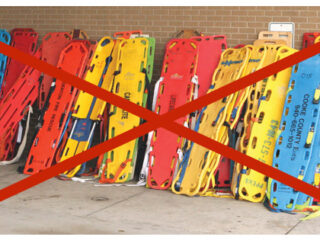
In the first of our series on Highlights from North York General's Emergency Medicine Update Conference, Dr. Kylie Boothdiscusses Backboard and Collar Nightmares. The idea that backboards and c-spine collars prevent spinal cord injuries came from level 3 evidence in the 1960's and there has never been an RCT to prove this theory. In fact a Cochrane review on the topic in 2007 concluded that "the effect of pre-hospital spinal immobilisation on mortality, neurological injury, spinal stability and adverse effects in trauma patients remains uncertain" and that "the possibility that immobilisation may increase mortality and morbidity cannot be excluded". There have subsequently been several observational studies that describe increased morbidity and mortality associated with backboard and collars in a subset of patients. Dr. Booth argues that the time has long past that a major paradigm shift needs to occur toward a safer more rational use of backboards and collars in our trauma patients.
Best Case Ever 36 Tracheo-innominate Fistula
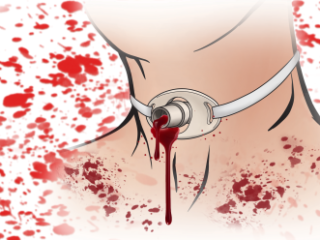
In this Best Case Ever with Dr. Scott Weingart, the brains behind EMcrit.org, we hear the devastating story of a tracheostomy gone bad. Dr. Weingart shares with us what he has learned about how to manage massive hemoptysis in tracheostomy patients, and in particlar, a step-wise approach to managing a tracheo-innominate fistula. We discuss the balance between providing maximal aggrressive critical care while maintaining a deep respect for the risks associated with the procedures we perform. Recorded at North York General's EM Update Conference 2015.
