About Anton Helman

Dr. Anton Helman is an Emergency Physician at North York General in Toronto. He is an Assistant Professor at the University of Toronto, Division of Emergency Medicine and the Education Innovation Lead at the Schwartz-Reisman Emergency Medicine Instititute. He is the founder, editor-in-chief and host of Emergency Medicine Cases.

Episode 66 Backboard and Collar Nightmares from Emergency Medicine Update Conference

In the first of our series on Highlights from North York General's Emergency Medicine Update Conference, Dr. Kylie Boothdiscusses Backboard and Collar Nightmares. The idea that backboards and c-spine collars prevent spinal cord injuries came from level 3 evidence in the 1960's and there has never been an RCT to prove this theory. In fact a Cochrane review on the topic in 2007 concluded that "the effect of pre-hospital spinal immobilisation on mortality, neurological injury, spinal stability and adverse effects in trauma patients remains uncertain" and that "the possibility that immobilisation may increase mortality and morbidity cannot be excluded". There have subsequently been several observational studies that describe increased morbidity and mortality associated with backboard and collars in a subset of patients. Dr. Booth argues that the time has long past that a major paradigm shift needs to occur toward a safer more rational use of backboards and collars in our trauma patients.

Best Case Ever 36 Tracheo-innominate Fistula

In this Best Case Ever with Dr. Scott Weingart, the brains behind EMcrit.org, we hear the devastating story of a tracheostomy gone bad. Dr. Weingart shares with us what he has learned about how to manage massive hemoptysis in tracheostomy patients, and in particlar, a step-wise approach to managing a tracheo-innominate fistula. We discuss the balance between providing maximal aggrressive critical care while maintaining a deep respect for the risks associated with the procedures we perform. Recorded at North York General's EM Update Conference 2015.

Episode 65 – IV Iron for Anemia in Emergency Medicine

For years we’ve been transfusing red cells in the ED to patients who don’t actually need them. A study looking at trends in transfusion practice in the ED found that about 1/3 of transfusions given were deemed totally inappropriate. As we explained in previous EM Cases episodes, there have been a whole slew of articles in the literature over the years that have shown that morbidity and mortality outcomes with lower hemoglobin thresholds, like 70g/L for transfusing ICU patients (TRICC trial), patients in septic shock (TRISS trial), and patients with GI bleeds are similar to outcomes with traditional higher hemoglobin thresholds of 90 or 100g/L. We’re simply transfusing blood way too much! The American Association of Blood Banks in conjunction with the American Board of Internal Medicine’s Choosing Wisely campaign, as one of its 5 statements on overuse of procedures, stated, “don’t transfuse iron deficiency without hemodynamic instability”. So, in this episode with the help of Transfusion specialist, researcher and co-author of the American Association of Blood Banks transfusion guidelines Dr. Jeannie Callum, Transfusion specialist and researcher Dr. Yulia Lin, and 'the walking encyclopedia of EM' Dr. Walter Himmel, we give you an understanding of why it’s important to avoid red cell transfusions in certain situations, why IV iron is sometimes a better option in a significant subset of anemic patients in the ED, and the practicalities of exactly how to administer IV iron.

Journal Jam 3 – Ultrasound vs CT for Renal Colic

In this Journal Jam we have Dr. Michelle Lin from Academic Life in EM interviewing two authors, Dr. Rebecca Smith‑Bindman, a radiologist, and Dr. Ralph Wang an EM physician both from USCF on their article “Ultrasonography versus Computed Tomography for suspected Nephrolithiasis” published in the New England Journal of Medicine in 2014. There is currently a wide practice variation in the imaging work-up of the patient who presents to the ED with a high suspicion for renal colic. On the one extreme, some EM physicians use CT to screen all patients who present with renal colic, while on the other extreme, other EM physicians do not use any imaging on any patient who has had previous imaging. The role of POCUS and radiology department ultrasound as an alternative to CT in the work up of renal colic has not been clearly defined in the ED setting. This study was a pragmatic multi-centre randomized control trial of patients in whom the primary diagnostic concern was renal colic, that tried to answer the question: is there a significant difference in the serious missed diagnosis rate, serious adverse events rate, pain, return visits, admissions to hospital, radiation dose and diagnostic accuracy if the EM provider chose POCUS, radiology department ultrasound or CT for their initial imaging modality of choice. This Journal Jam is peer review by EMNerd's Rory Spiegel. [wpfilebase tag=file id=618 tpl=emc-play /] [wpfilebase tag=file id=619 tpl=emc-mp3 /]

Funding FOAMed

  Funding and freeing the future of learning that is FOAMed Longtime followers of EM Cases will have noticed a progressively prominent display on its website of the logo and inclusion of the name of the Schwartz/Reisman Emergency Medicine Institute — or SREMI —over the past two years. Some of you may have wondered what an Emergency Medicine Institute is, and what this one has to do with EM Cases. It's about funding FOAMed. What is SREMI? SREMI was established in November 2013 by a founding gift from our patrons, Gerald Schwartz and Heather Reisman. It is a partnership of Mount Sinai Hospital (now part of the Sinai Health System) and North York General Hospital in Toronto. Our vision is to advance the discipline of emergency medicine through the development of new knowledge — research and translating that knowledge into practice — as well as advocating for system improvement through better public policy. The partnership brought together two hospitals that already knew each other well and collaborated extensively; Mount Sinai brought strength in research and education including simulation, North York added its national reputation in continuing medical education. Dr. Anton Helman, the founder of EM Cases, [...]

By |2017-02-03T11:50:18-05:00May 14th, 2015|Categories: Waiting to be Seen|Tags: , , |1 Comment

Episode 64 Highlights from Whistler’s Update in EM Conference 2015 Part 2

In this Part 2 of EM Cases' Highlights from Whistler's Update in EM Conference 2015 Dr. David Carr gives you his top 5 pearls and pitfalls on ED antibiotic use including when patients with sinusitis really require antibiotics, when oral antibiotics can replace IV antibiotics, how we should be dosing Vancomycin in the ED, the newest antibiotic regimens for gonorrhea and the mortality benefit associated with antibiotic use in patients with upper GI bleeds. Dr. Chris Hicks gives you his take on immediate PCI in post-cardiac arrest patients with a presumed cardiac cause and The Modified HEART Score to safely discharge patients with low risk chest pain.

Episode 63 – Pediatric DKA

Pediatric DKA was identified as one of key diagnoses that we need to get better at managing in a massive national needs assessment conducted by the fine folks at TREKK – Translating Emergency Knowledge for Kids – one of EM Cases’ partners who’s mission is to improve the care of children in non-pediatric emergency departments across the country. You might be wondering - why was DKA singled out in this needs assessment? It turns out that kids who present to the ED in DKA without a known history of diabetes, can sometimes be tricky to diagnose, as they often present with vague symptoms. When a child does have a known history of diabetes, and the diagnosis of DKA is obvious, the challenge turns to managing severe, life-threatening DKA, so that we avoid the many potential complications of the DKA itself as well as the complications of treatment - cerebral edema being the big bad one. The approach to these patients has evolved over the years, even since I started practicing, from bolusing insulin and super aggressive fluid resuscitation to more gentle fluid management and delayed insulin drips, as examples. There are subtleties and controversies in the management of DKA when it comes to fluid management, correcting serum potassium and acidosis, preventing cerebral edema, as well as airway management for the really sick kids. In this episode we‘ll be asking our guest pediatric emergency medicine experts Dr. Sarah Reid, who you may remember from her powerhouse performance on our recent episodes on pediatric fever and sepsis, and Dr. Sarah Curtis, not only a pediatric emergency physician, but a prominent pediatric emergency researcher in Canada, about the key historical and examination pearls to help pick up this sometimes elusive diagnosis, what the value of serum ketones are in the diagnosis of DKA, how to assess the severity of DKA to guide management, how to avoid the dreaded cerebral edema that all too often complicates DKA, how to best adjust fluids and insulin during treatment, which kids can go home, which kids can go to the floor and which kids need to be transferred to a Pediatric ICU.

Why Recording Time to Initial Assessment is Worthwhile

As both an emergency director and a practising emergency physician, I believe it is the job of administrators to make the challenges of front line staff easier, not vice-versa. Clinicians are too busy taking care of patients to perform purely administrative chores. But one task that I would ask all emergency doctors to adopt is the step of recording the time of Physician Initial Assessment, or PIA times. The time from arrival until they first see a physician is what most patients consider their ED wait time, and it is an important metric to report. Yes, it means one more small box to fill out in your charting, but it can be of huge benefit to doctors. Allow me to explain why....

By |2019-11-11T17:08:10-05:00April 23rd, 2015|Categories: Waiting to be Seen|Tags: , , |0 Comments

Episode 62 Diagnostic Decision Making in Emergency Medicine

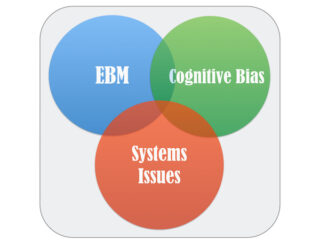
This is Part 1 of EM Cases' series on Diagnostic Decision Making with Walter Himmel, Chris Hicks and David Dushenski discussing the intersection of evidence-based medicine, cognitive bias and systems issues to effect our diagnostic decision making in Emergency Medicine. In this episode we first discuss 5 strategies to help you master evidence-based diagnostic decision making to minimize diagnostic error, avoid over-testing and improve patient care including: 1. The incorporation of patients' values and clinical expertise into evidence-based decisions 2. Critically appraising diagnostic studies 3. Understanding that diagnostic tests are not perfect 4. Using the concept of test threshold to guide work-ups 5. Understanding that the predictive value of a test depends on the prevalence of disease We then go on to review some of the factors that play into the clinician’s and patient’s risk tolerance in a given clinical encounter, how this plays into shared decision making and the need to adjust our risk tolerance in critical situations. Finally, we present some strategies to prevent over-testing while improving patient care, patient flow and ethical practice.

Best Case Ever 35: Taking Action in Emergency Medicine

In anticipation of our series of podcasts on Diagnostic Decision Making with Dr. Walter Himmel, Dr. Chris Hicks and Dr. David Dushenski we have Dr. Hicks presenting his Best Case Ever. Taking action in Emergency Medicine requires not only careful consideration of the best evidence, the experience of the clinician, the patient's values and the system that you work in, but also the will to act. Dr. Hicks describes a case of a patient who suffers a cardiac arrest, where the diagnosis is quite obvious to everyone in the room (and the required action is as well), yet a delay in treatment occurs nonetheless.

Donate Subscribe
Go to Top