

Trauma
Episode 83 – 5 Critical Care Controversies from SMACC Dublin
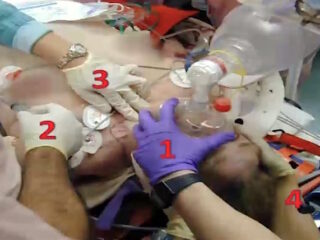
EM Cases Episode 83 - 5 Critical Care Controversies from SMACC Dublin: I had the great opportunity to gather some of the brightest minds in Emergency Medicine and Critical Care from around the world (Mark Forrest from U.K., Chris Nickson from Australia, Chris Hicks from Canada and Scott Weingart from U.S.) at the SMACC Dublin Conference and ask them about 5 Critical Care Controversies and concepts: How to best prepare your team for a resuscitation Optimum fluid management in sepsis Direct vs. video laryngoscopy as first line tool for endotracheal intubation Early vs. late trauma intubation Whether or not to attempt a thoracotomy in non-trauma centres The discussion that ensued was enlightening...
CritCases 3 – GSW to the Chest
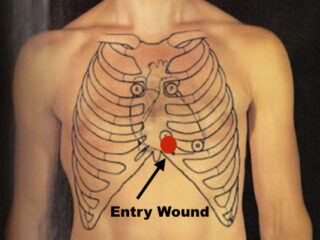
EM Cases CritCases 3 - GSW to the chest in a rural setting. In this CritCases we discuss preparation for penetrating trauma in a rural setting, the ABC score, massive transfusion protocol, clamshell thoracotomy, trauma intubation and more. The Case... You are the transport physician on call. A 50-year old male with a history of depression allegedly shot himself in the chest with a rifle. A bystander called 911. The local paramedics are en route and the air transport team is activated with a plan to rendezvous at the nearest hospital, Janus General, which is 90 minutes by ground from the nearest tertiary care centre. You contact the rural hospital for a status update but all they can tell you is that his GCS is 14 and he has a GSW to the central chest.
BEEM Cases 1 – Pediatric Minor Head Injury
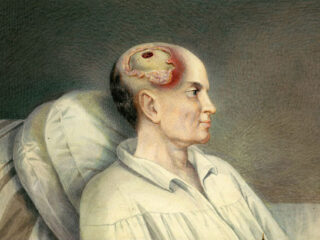
Dr. Andrew Worster and the BEEM (Best Evidence in Emergency [...]
Episode 69 Obesity Emergency Management
Current estimates of the prevalence of obesity are that a quarter of adult Canadians and one third of Americans are considered obese with approximately 3% being morbidly obese. With the proportion of patients with a BMI>30 growing every year, you’re likely to manage at least one obese patient on every ED shift. Obese patients are at high risk of developing a host of medical complications including diabetes, hypertension, coronary artery disease, peripheral vascular disease, biliary disease, sleep apnea, cardiomyopathy, pulmonary embolism and depression, and are less likely compared to non-obese adults to receive timely care in the ED. Not only are these patients at higher risk for morbidity and mortality, but obesity emergency management is complicated by the patient’s altered cardiopulmonary physiology and drug metabolism. This can make their acute management much more challenging and dangerous. To help us gain a deeper understanding of the challenges of managing obese patients and elucidate a number of important differences as well as practical approaches to obesity emergency management, we welcome Dr. Andrew Sloas, the founder and creator of the fantastic pediatric EM podcast PEM ED, Dr. Richard Levitan, a world-famous airway management educator and innovator and Dr. David Barbic a prominent Canadian researcher in obesity in emergency medicine from University of British Columbia....

Best Case Ever 39 – Airway Strategy & Mental Preparedness in EM Procedures with Richard Levitan
I caught up with airway educator, innovator and self-described enthusiast Dr. Richard Levitan at SMACC in Chicago this past June. In this Best Case Ever on Airway Strategy and Mental Preparedness in EM Procedures, Dr. Levitan uses a great save of his in a penetrating trauma case as a basis for discussion on mental preparedness and how we've been thinking about our general approach to emergency procedures the wrong way. Rather than fixating on the final goal of a procedure, which can often be daunting and lead us astray, he suggests a methodical incrementalized and compartmentalized approach to EM procedures that reduces stress and fear, improves confidence and enhances success. He runs through several examples including intubation, cricothyrotomy and initial approach to hypoxia to explain his Simple Incremental Approach to EM Procedures. Could this be a paradigm shift in the way we think about procedures in EM?....
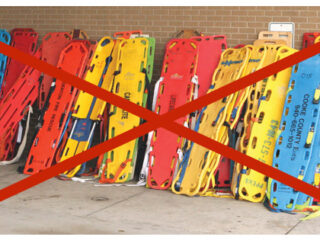
Episode 66 Backboard and Collar Nightmares from Emergency Medicine Update Conference
In the first of our series on Highlights from North York General's Emergency Medicine Update Conference, Dr. Kylie Boothdiscusses Backboard and Collar Nightmares. The idea that backboards and c-spine collars prevent spinal cord injuries came from level 3 evidence in the 1960's and there has never been an RCT to prove this theory. In fact a Cochrane review on the topic in 2007 concluded that "the effect of pre-hospital spinal immobilisation on mortality, neurological injury, spinal stability and adverse effects in trauma patients remains uncertain" and that "the possibility that immobilisation may increase mortality and morbidity cannot be excluded". There have subsequently been several observational studies that describe increased morbidity and mortality associated with backboard and collars in a subset of patients. Dr. Booth argues that the time has long past that a major paradigm shift needs to occur toward a safer more rational use of backboards and collars in our trauma patients.
