North York General’s emergency medicine update conference highlights

Compassionate Care to Improve Patient Outcomes and Your Career from EMU 2024

As a profession, we suck at compassion as it is trained out of us through medical school and beyond. Compassion in not simply innate; like any behaviour, it can be learned through deliberate practice. There is evidence that compassion may improve morbidity and/or mortality in patients after trauma, cardiac events, cancer, diabetes, back pain, migraine headache and other conditions, prevent physician burnout and reduces rates of medical error, reduce the rates of patient complaints and litigation, and improve physician efficiency and resource utilization by reducing non-essential test ordering. A cultural shift emphasizing the importance of compassion in patient care needs to occur to improve outcomes of our patients and our job satisfaction; as such, compassion should be part of our training and CME...
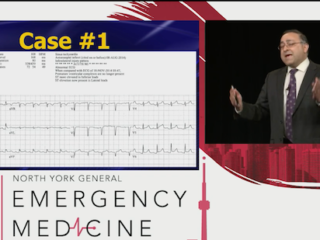
EMU365 Amal Mattu on Killer ECGs and Pericardial Effusions

This EMU365 video features EM cardiology guru Dr. Amal Mattu on killer ECGs associated with pericardial effusions. He eloquently explains the utility of electrical alternans, specific lead and voltage criteria required to make the diagnosis of low voltage and more...

Ep 110 Airway Pitfalls – Live from EMU 2018

The last decade has seen a torrent of literature and expert opinion on emergency airway management. It is challenging to integrate all this new information into a seamless flow when faced with a challenging airway situation. In this live podcast recorded at North York General's Emergency Medicine Update Conference 2018, Scott Weingart and Anton Helman put together the latest in emergency airway management by outlining  6 common airway pitfalls: Failure to prepare for failure, failure to position the patient properly, failure to optimize oxygenation, failure to optimize hemodynamics, failure to consider an awake intubation and failure to prepare for a cricothyrotomy...

Episode 99 Highlights from EMU 2017

North York General Hospital's 30th Annual Emergency Medicine Update (EMU) Conference 2017 featured some of the best talks I've ever heard from the likes of Sara Gray, Amal Mattu, David Carr and many more. I had a hard time choosing which talks to feature on this EM Cases podcast. I settled on a potpourri of clinical topics and practice tips: Leeor Sommer on Lyme disease, Chris Hicks on signover, Matt Poyner on patient complaints and Walter Himmel on acute vestibular syndrome...

Episode 97 EM Literature Review 2016 from EMU & Whistler Conferences

Quick and insightful reviews of 17 important adult and pediatric emergency medicine studies from 2016: The PROCAMIO study for stable VT, platelets for head bleeds (PATCH), BP lowering in ICH (ATACH II), antibiotics for abscesses, work up of subarachnoid hemorrhage, dosing IV ketorolac, the PESIT trial, ketamine dosage for sedation in pediatrics, instructions after minor head injury, Salter-Harris I fractures of the lateral malleolus, interpreting oxygen saturation for disposition making in children with bronchiolitis, clinical pathways in pediatric asthma and sepsis and more...

Episode 96 Beyond ACLS Cardiac Arrest – Live from EMU Conference 2017

This is the first ever video podcast on EM Cases with Jordan Chenkin from EMU Conference 2017 discussing how to optimize three aspects of cardiac arrest care: persistent ventricular fibrillation, optimizing pulse checks and PEA arrest, with code team videos contrasting the ACLS approach to an optimized approach...

Best Case Ever 45 – Mike Winters on Cardiac Arrest

I had the great pleasure of meeting Dr. Mike Winters on his first ever visit to Canada at North York General's Emergency Medicine Update Conference, where he gave two fantastic presentations. His credentials are impressive: He is the Medical Director of the Emergency Department, Associate Professor in both EM and IM, EM-IM-Critical Care Program co-director and Residency Program Director of EM-IM at the University of Maryland in Baltimore. Sometimes we are so caught up with the job we need to get done during cardiac arrest that we forget about the important and profound effect that this event has on patients' families. On this Best Case Ever Dr. Winters tells the story of witnessing his grandfather's cardiac arrest, being present in the ED during the resuscitation attempts, and how that experience has coloured his practice. We discuss some pearls on communication with patients' families after death, colour-coded cardiac arrest teams and how to integrate POCUS into cardiac arrest care while minimizing chest compressions.

Episode 66 Backboard and Collar Nightmares from Emergency Medicine Update Conference

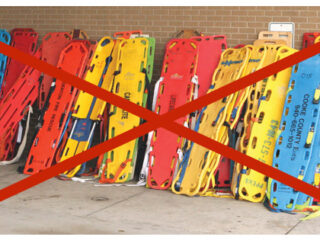
In the first of our series on Highlights from North York General's Emergency Medicine Update Conference, Dr. Kylie Boothdiscusses Backboard and Collar Nightmares. The idea that backboards and c-spine collars prevent spinal cord injuries came from level 3 evidence in the 1960's and there has never been an RCT to prove this theory. In fact a Cochrane review on the topic in 2007 concluded that "the effect of pre-hospital spinal immobilisation on mortality, neurological injury, spinal stability and adverse effects in trauma patients remains uncertain" and that "the possibility that immobilisation may increase mortality and morbidity cannot be excluded". There have subsequently been several observational studies that describe increased morbidity and mortality associated with backboard and collars in a subset of patients. Dr. Booth argues that the time has long past that a major paradigm shift needs to occur toward a safer more rational use of backboards and collars in our trauma patients.

Best Case Ever 36 Tracheo-innominate Fistula

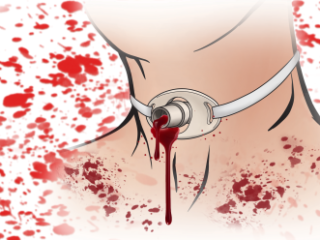
In this Best Case Ever with Dr. Scott Weingart, the brains behind EMcrit.org, we hear the devastating story of a tracheostomy gone bad. Dr. Weingart shares with us what he has learned about how to manage massive hemoptysis in tracheostomy patients, and in particlar, a step-wise approach to managing a tracheo-innominate fistula. We discuss the balance between providing maximal aggrressive critical care while maintaining a deep respect for the risks associated with the procedures we perform. Recorded at North York General's EM Update Conference 2015.

Episode 47: Evidence Based Medicine from NYGH EMU Conference 2014

Dr. Walter Himmel (the 'walking encyclopedia of EM') gave a fantastic talk from North York General's Emergency Medicine Update Conference in Toronto, which have edited into a podcast with key commentary and summaries. Dr. Himmel eloquently shows us, through absolutely stunning personal cases, how evidence based medicine can be appropriately or inappropriately applied in real practice, resulting in major outcome differences for your patients. He elucidates the importance of clinical experience, patient values and ED resources in helping apply the medical literature to your practice. He reviews the essence of critical appraisal, the hierarchy of evidence and how to keep up with the emergency medicine literature. The famous NINDS thrombolysis for stroke trial is distilled down to a few key considerations and the NEJM transfusion for upper GI bleed trial from last year is dissected, analyzed and then applied to Dr. Himmel's personal cases, to help us understand exactly how to apply the literature to our daily practice. Blog post and written summary prepared by Keerat Grewal, edited by Anton Helman July 2014

Donate Subscribe
Go to Top