

Cardiovascular

Best Case Ever 59 Management of Acute Renal Failure with Volume Overload
Sometimes our renal failure patients present short of breath with volume overload and we don't have immediate access to dialysis. What then? Dr. Mike Betzner, EM doc and medical director of STARS air ambulance service and collaborator on EM Cases CritCases blog tells his Best Case Ever and his approach to this challenging clinical situation. He offers two commonly used solutions: nitroglycerin and BiPAP as well as two not so common solutions: phlebotomy and rotating BP cuffs blown to above SBP...

Episode 96 Beyond ACLS Cardiac Arrest – Live from EMU Conference 2017
This is the first ever video podcast on EM Cases with Jordan Chenkin from EMU Conference 2017 discussing how to optimize three aspects of cardiac arrest care: persistent ventricular fibrillation, optimizing pulse checks and PEA arrest, with code team videos contrasting the ACLS approach to an optimized approach...
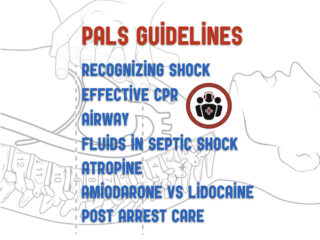
Episode 93 – PALS Guidelines
I remember when I started practicing emergency medicine a decade and a half ago it seemed that any kid who came to our ED in cardiac arrest died. I know, depressing thought. But, over the past 15 years, survival to discharge from pediatric cardiac arrest has markedly improved, at least for in-hospital arrests. This is probably mostly due to an emphasis on high-quality CPR and advances in post-resuscitation care; nonetheless the more comfortable, knowledgeable and prepared we are for the always scary critically ill pediatric patient, the more likely we will be able to resuscitate them successfully - which is always a huge save.

Episode 92 – Aortic Dissection Live from The EM Cases Course
While missing aortic dissection was considered "the standard" in the late 20th century, our understanding of the clinical diagnoses has improved considerably since the landmark International Registry of Aortic Dissection (IRAD) study in 2000. Nonetheless, aortic dissection remains difficult to diagnosis with 1 in 6 being missed at the initial ED visit. With the help of Dr. David Carr we’ll discuss how to pick up atypical presentations of aortic dissection without over-imaging as well as manage them like pros by reviewing: 1. The 5 Pain Pearls, 2. The concepts of CP +1 and 1+ CP, 3. Physical exam pearls, 4. CXR pearls and blood test pitfalls, and 5. The importance of the correct order and aggressive use of IV medications. So with these objectives in mind…

Journal Jam 9 – D-dimer to Rule Out Aortic Dissection
The EM Cases Team is very excited to bring you not only a new format for the Journal Jam podcast but a new member of the team, Dr. Rory Spiegel, aka @EM_Nerd an Emergency Medicine physician from The University Maryland Medical Center in Baltimore, the founder of the EM Nerd blog and the co-host of the Annals of EM podcast. The new format sees Justin Morgenstern, Teresa Chan, Rory Spiegel and Anton Helman doing deep dives into the world's literature on specific practical questions while highlighting some important evidence-based medicine concepts. The question we ask in this Journal Jam podcast: Is there a role for D-dimer testing in the workup of aortic dissection in the ED?

Best Case Ever 52 – Pediatric Hypothermia Cardiac Arrest
In anticipation of EM Cases Episode 90 on the Pediatric Advanced Life Support (PALS) guidelines with the lead author Dr. Allan DeCaen and Dr. Anthony Crocco, Dr. DeCaen tells his Best Case Ever showing us the value of orchestrated team work and a great example of the saying, "they're not dead until they're warm and dead"...
