emergency medicine education

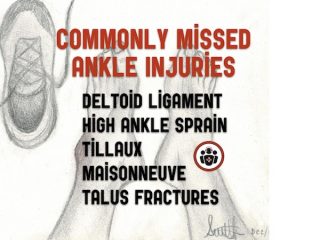
Ep 105 Commonly Missed Ankle Injuries

You probably can't remember the last time you worked a shift in the ED and didn’t see at least one patient with an ankle injury. While almost all of these patients are relatively straightforward to diagnose and manage a small but significant minority of these patients will have a more elusive diagnosis, that if not identified early, could lead to significant morbidity...

EM Cases Best of 2017 Top 10

Based on a blend of the number of podcast downloads, webpage views, social media engagement, number of positive emails and comments that I received, and my own favs, I'm pleased to bring you the EM Cases Best of 2017 Top 10. Many huge thanks to the entire EM Cases team, Advisory Board, SREMI, the amazing guest experts and you, the listeners of the podcasts, readers of the blogs, viewers of the videos and participants in the course, for making 2017 another successful year for EM Cases! And here they are...

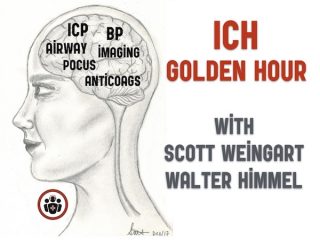
Ep 104 Emergency Management of Intracerebral Hemorrhage – The Golden Hour

There exists a kind of self-fulfilling prognostic pessimism when it comes to ICH. And this pessimism sometimes leads to less than optimal care in patients who otherwise might have had a reasonably good outcome if they were managed aggressively. Despite the poor prognosis of these patients overall, there is some evidence to suggest that early aggressive medical management may improve outcomes. As such, the skill with which you manage your patient with ICH in those first few hours could be the most important determinant of their outcome. In this Golden Hour you have a chance to prevent hematoma expansion, stabilize intracerebral perfusion and give your patient the best chance of survival with neurologic recovery.

Journal Jam 11 Post Contrast Acute Kidney Injury – PCAKI

Lauren Westafer joins Justin Morgenstern, Rory Spiegel and Anton Helman in a deep dive discussion on the world's literature on Post Contrast Acute Kidney Injury (PCAKI) in this Journal Jam podcast. Hospitals continue to insist on time consuming, and potentially dangerous protocols for administration of fluids to patients with renal dysfunction prior to CT IV contrast despite the lack of evidence that Contrast Induced Nephropathy (CIN) even exists. Would you choose a different imaging modality if your radiologist suggested that a patient with renal dysfunction who required a CT with IV contrast should forgo the contrast risking a missed diagnosis?

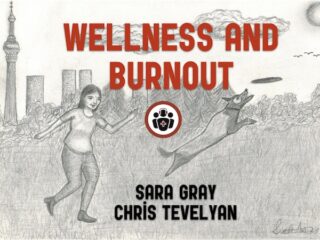
Ep 103 Preventing Burnout and Promoting Wellness in Emergency Medicine

Burnout – it’s the elephant in the room that we all know about but prefer not to discuss. Yet according to a 2013 Medscape survey, 40% of physicians reported burnout in U.S. In this episode, Sara Gray and Chris Trevelyan present an honest approach to preventing burnout and promoting wellness, outlining strategies both at the individual and systems levels. They explain why wellness matters, how you can strive to achieve it and how to recognize when you or a colleague are unwell so that you can get the help you need...

BCE 63 Failing Up after Medical Error

Dr. Sarah Gray tells us the story of her worst case ever and what she learned from it. About 50% of North American physicians involved in a serious medical error report increased anxiety for future errors, decreased confidence in their job, decreased job satisfaction, insomnia, PTSD, panic disorder – the list goes on. Dr. Gray shares how and why many of us react to medical error - the embarrassment, the shame, the guilt and sense of failure. She then explains the notion of acceptance that we all fail, that perfection is a myth, and how she learned that "failing up" after of the most difficult case of her career is the best choice after making a medical error...

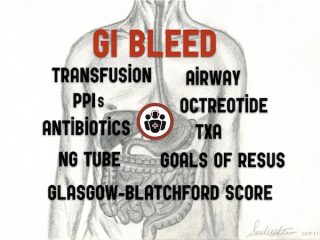
Episode 101 GI Bleed Emergencies Part 1

In this Part 1 of our two part podcast on GI bleed emergencies we answer questions such as: How do you distinguish between an upper vs lower GI bleed when it's not so obvious clinically? What alterations to airway management are necessary for the GI bleed patient? What do we need to know about the value of fecal occult blood in determining whether or not a patient has a GI bleed? Which patients require red cell transfusions? Massive transfusion? Why is it important to get a fibrinogen level in the sick GI bleed patient? What are the goals of resuscitation in a massive GI bleed? What's the evidence for using an NG tube for diagnosis and management of upper GI bleeds?  In which patients should we give tranexamic acid and which patients should we avoid it in? How are the indications for massive transfusion in GI bleed different to the trauma patient? What are your options if the bleeding can't be stopped on endoscopy? and many more...

Best Case Ever 62 Penetrating Upper Airway Injury Awake Intubation Do’s & Don’ts

If you were faced with stab wound to the neck and had to act fast, would you have a well-thought out plan that you are comfortable with? In this EM Cases Best Case Ever podcast we discuss the do's and don'ts of penetrating upper airway injury awake intubation with airway expert George Kovacs....

Episode 100 Disaster Medicine

As ED docs we’re particularly well suited to take a lead in disaster medicine. We own this. In this EM Cases podcast, with the help of Laurie Mazurik, Daniel Kollek and Joshua Bezanson we will help you become familiar with a general approach to mass casualties, how to handle critical infrastructure disruption in your ED, management of biohazards including airway management, chemical hazards including decontamination and finally evacuation principles in the case of a natural disaster...

Best Case Ever 61 Biohazard Preparedness: The Protected Code Blue

In anticipation of EM Cases Main Episode 100 on Disaster Medicine with Laurie Mazurik, David Kollek and Joshua Bezanson, Dr. Mazurik tells of her experience as a disaster medicine leader with keeping health care workers safe during the SARS era. If you were faced with a patient with suspected Ebola or drug resistant TB or any other biohazard patient who required intubation, would you know how to handle the situation so that you and your colleagues were safe...

Donate Subscribe
Go to Top