emergency medicine education

WTBS 4 – Emergency Physician Speed: How Fast is Fast Enough?

Racing legend Mario Andretti famously said, “If everything seems under control, you’re just not going fast enough.” He was talking about cars, but to many beleaguered emergency physicians trying to keep up with the patient queue, emergency medicine often seems this way. This guest blog on emergency physician productivity began as a question to our national association, the Canadian Association of Emergency Physicians (CAEP): Are there any national standards with respect to emergency physician productivity, i.e., expected number of patients assessed per hour? The question was referred to the CAEP Public Affairs Committee and triggered a lively email discussion among our members....

Episode 69 Obesity Emergency Management

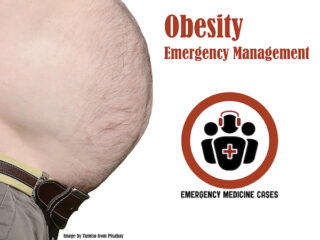
Current estimates of the prevalence of obesity are that a quarter of adult Canadians and one third of Americans are considered obese with approximately 3% being morbidly obese. With the proportion of patients with a BMI>30 growing every year, you’re likely to manage at least one obese patient on every ED shift. Obese patients are at high risk of developing a host of medical complications including diabetes, hypertension, coronary artery disease, peripheral vascular disease, biliary disease, sleep apnea, cardiomyopathy, pulmonary embolism and depression, and are less likely compared to non-obese adults to receive timely care in the ED. Not only are these patients at higher risk for morbidity and mortality, but obesity emergency management is complicated by the patient’s altered cardiopulmonary physiology and drug metabolism. This can make their acute management much more challenging and dangerous. To help us gain a deeper understanding of the challenges of managing obese patients and elucidate a number of important differences as well as practical approaches to obesity emergency management, we welcome Dr. Andrew Sloas, the founder and creator of the fantastic pediatric EM podcast PEM ED, Dr. Richard Levitan, a world-famous airway management educator and innovator and Dr. David Barbic a prominent Canadian researcher in obesity in emergency medicine from University of British Columbia....

Journal Jam 4 – Low Dose Ketamine Analgesia

You’d think ketamine was in the ED drinking water! Not only has this NMDA receptor antagonist been used effectively for procedural sedation and rapid sequence intubation, but also, for delayed sequence intubation to buy time for pre-oxygenation, for life-threatening asthma as it has bronchodilatory and anxiolytic effects, for severely agitated psychiatric patients and excited delirium syndrome to dissociate them and get them under control; ketamine has even been used for refractory status epilepticus and for head injured patients as it is thought to have neuroprotective effects. The big question is: How effective is low dose ketamine analgesia for patients with moderate to severe pain in the ED as an adjunct to opiods? Low dose ketamine seems not only to help control pain, but it also has this almost magical effect of making patients indifferent to the pain. Pain is everywhere. And oligoanalgesia occurs in up to 43% of patients in EDs. Can we relieve suffering with low dose ketamine analgesia in the ED?....

Best Case Ever 36 Tracheo-innominate Fistula

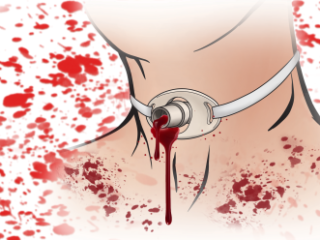
In this Best Case Ever with Dr. Scott Weingart, the brains behind EMcrit.org, we hear the devastating story of a tracheostomy gone bad. Dr. Weingart shares with us what he has learned about how to manage massive hemoptysis in tracheostomy patients, and in particlar, a step-wise approach to managing a tracheo-innominate fistula. We discuss the balance between providing maximal aggrressive critical care while maintaining a deep respect for the risks associated with the procedures we perform. Recorded at North York General's EM Update Conference 2015.

Journal Jam 3 – Ultrasound vs CT for Renal Colic

In this Journal Jam we have Dr. Michelle Lin from Academic Life in EM interviewing two authors, Dr. Rebecca Smith‑Bindman, a radiologist, and Dr. Ralph Wang an EM physician both from USCF on their article “Ultrasonography versus Computed Tomography for suspected Nephrolithiasis” published in the New England Journal of Medicine in 2014. There is currently a wide practice variation in the imaging work-up of the patient who presents to the ED with a high suspicion for renal colic. On the one extreme, some EM physicians use CT to screen all patients who present with renal colic, while on the other extreme, other EM physicians do not use any imaging on any patient who has had previous imaging. The role of POCUS and radiology department ultrasound as an alternative to CT in the work up of renal colic has not been clearly defined in the ED setting. This study was a pragmatic multi-centre randomized control trial of patients in whom the primary diagnostic concern was renal colic, that tried to answer the question: is there a significant difference in the serious missed diagnosis rate, serious adverse events rate, pain, return visits, admissions to hospital, radiation dose and diagnostic accuracy if the EM provider chose POCUS, radiology department ultrasound or CT for their initial imaging modality of choice. This Journal Jam is peer review by EMNerd's Rory Spiegel. [wpfilebase tag=file id=618 tpl=emc-play /] [wpfilebase tag=file id=619 tpl=emc-mp3 /]

Episode 64 Highlights from Whistler’s Update in EM Conference 2015 Part 2

In this Part 2 of EM Cases' Highlights from Whistler's Update in EM Conference 2015 Dr. David Carr gives you his top 5 pearls and pitfalls on ED antibiotic use including when patients with sinusitis really require antibiotics, when oral antibiotics can replace IV antibiotics, how we should be dosing Vancomycin in the ED, the newest antibiotic regimens for gonorrhea and the mortality benefit associated with antibiotic use in patients with upper GI bleeds. Dr. Chris Hicks gives you his take on immediate PCI in post-cardiac arrest patients with a presumed cardiac cause and The Modified HEART Score to safely discharge patients with low risk chest pain.

Episode 62 Diagnostic Decision Making in Emergency Medicine

This is Part 1 of EM Cases' series on Diagnostic Decision Making with Walter Himmel, Chris Hicks and David Dushenski discussing the intersection of evidence-based medicine, cognitive bias and systems issues to effect our diagnostic decision making in Emergency Medicine. In this episode we first discuss 5 strategies to help you master evidence-based diagnostic decision making to minimize diagnostic error, avoid over-testing and improve patient care including: 1. The incorporation of patients' values and clinical expertise into evidence-based decisions 2. Critically appraising diagnostic studies 3. Understanding that diagnostic tests are not perfect 4. Using the concept of test threshold to guide work-ups 5. Understanding that the predictive value of a test depends on the prevalence of disease We then go on to review some of the factors that play into the clinician’s and patient’s risk tolerance in a given clinical encounter, how this plays into shared decision making and the need to adjust our risk tolerance in critical situations. Finally, we present some strategies to prevent over-testing while improving patient care, patient flow and ethical practice.

Best Case Ever 35: Taking Action in Emergency Medicine

In anticipation of our series of podcasts on Diagnostic Decision Making with Dr. Walter Himmel, Dr. Chris Hicks and Dr. David Dushenski we have Dr. Hicks presenting his Best Case Ever. Taking action in Emergency Medicine requires not only careful consideration of the best evidence, the experience of the clinician, the patient's values and the system that you work in, but also the will to act. Dr. Hicks describes a case of a patient who suffers a cardiac arrest, where the diagnosis is quite obvious to everyone in the room (and the required action is as well), yet a delay in treatment occurs nonetheless.

Episode 61 Whistler’s Update in EM Conference 2015 Highlights Part 1

This EM Cases episode is Part 1 of The Highlights of The University of Toronto, Divisions of Emergency Medicine, Update in EM Conference from Whistler 2015 with Paul Hannam on Pearls and Pitfalls of Intraosseus Line Placement, Anil Chopra on who is at risk and how to prevent Contrast Induced Nephropathy, and Joel Yaphe on the Best of EM Literature from 2014, including reduction of TMJ dislocations, the TRISS trial (on transfusion threshold in sepsis), PEITHO study for thrombolysis in submassive PE, Co-trimoxazole and Sudden Death in Patients Receiving ACE inhibitors or ARBs, the effectiveness and safety of outpatient Tetracaine for corneal abraisons, chronic effects of shift work on cognition and much more...

Best Case Ever 34: Inferior MI Presenting with Abdominal Pain

In a previous Best Case Ever, 'Thinking Outside the Abdominal Box', Dr. Brian Steinhart reviewed some important can't-miss-diagnoses that can present elusively with abdominal pain. In this Carr's Cases Series on Inferior MI Presenting with Abdominal Pain, we continue in the theme of 'Thinking Outside the Abdominal Box' with David Carr explaining how he figured out that a man presenting with classic biliary colic was diagnosed with an inferior MI with right ventricular extension.

Donate Subscribe
Go to Top