trauma emergency medicine

Episode 69 Obesity Emergency Management

Current estimates of the prevalence of obesity are that a quarter of adult Canadians and one third of Americans are considered obese with approximately 3% being morbidly obese. With the proportion of patients with a BMI>30 growing every year, you’re likely to manage at least one obese patient on every ED shift. Obese patients are at high risk of developing a host of medical complications including diabetes, hypertension, coronary artery disease, peripheral vascular disease, biliary disease, sleep apnea, cardiomyopathy, pulmonary embolism and depression, and are less likely compared to non-obese adults to receive timely care in the ED. Not only are these patients at higher risk for morbidity and mortality, but obesity emergency management is complicated by the patient’s altered cardiopulmonary physiology and drug metabolism. This can make their acute management much more challenging and dangerous. To help us gain a deeper understanding of the challenges of managing obese patients and elucidate a number of important differences as well as practical approaches to obesity emergency management, we welcome Dr. Andrew Sloas, the founder and creator of the fantastic pediatric EM podcast PEM ED, Dr. Richard Levitan, a world-famous airway management educator and innovator and Dr. David Barbic a prominent Canadian researcher in obesity in emergency medicine from University of British Columbia....

Best Case Ever 39 – Airway Strategy & Mental Preparedness in EM Procedures with Richard Levitan

I caught up with airway educator, innovator and self-described enthusiast Dr. Richard Levitan at SMACC in Chicago this past June. In this Best Case Ever on Airway Strategy and Mental Preparedness in EM Procedures, Dr. Levitan uses a great save of his in a penetrating trauma case as a basis for discussion on mental preparedness and how we've been thinking about our general approach to emergency procedures the wrong way. Rather than fixating on the final goal of a procedure, which can often be daunting and lead us astray, he suggests a methodical incrementalized and compartmentalized approach to EM procedures that reduces stress and fear, improves confidence and enhances success. He runs through several examples including intubation, cricothyrotomy and initial approach to hypoxia to explain his Simple Incremental Approach to EM Procedures. Could this be a paradigm shift in the way we think about procedures in EM?....

Episode 66 Backboard and Collar Nightmares from Emergency Medicine Update Conference

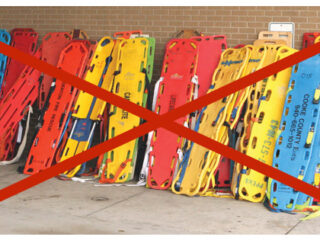
In the first of our series on Highlights from North York General's Emergency Medicine Update Conference, Dr. Kylie Boothdiscusses Backboard and Collar Nightmares. The idea that backboards and c-spine collars prevent spinal cord injuries came from level 3 evidence in the 1960's and there has never been an RCT to prove this theory. In fact a Cochrane review on the topic in 2007 concluded that "the effect of pre-hospital spinal immobilisation on mortality, neurological injury, spinal stability and adverse effects in trauma patients remains uncertain" and that "the possibility that immobilisation may increase mortality and morbidity cannot be excluded". There have subsequently been several observational studies that describe increased morbidity and mortality associated with backboard and collars in a subset of patients. Dr. Booth argues that the time has long past that a major paradigm shift needs to occur toward a safer more rational use of backboards and collars in our trauma patients.

Episode 56 The Stiell Sessions: Clinical Decision Rules and Risk Scales

There are hundreds of clinical decision rules and risk scales published in the medical literature, some more widely adopted than others. Ian Stiell, the father of clinical decision rules, shares with us his views and experiences gained from co-creating some of the most influential CDRs and risk scales to date. He explains the criteria for developing a CDR, the steps to developing a valid CDR, how best to apply CDRs and risk scales to clinical practice, and the hot-off the-press new Ottawa COPD Risk Score and Ottawa Heart Failure Risk Score for helping you with disposition decisions. It turns out that in Canada, we discharge about two thirds of the acute decompensated heart failure patients that we see in the ED, while the US almost all patients with decompensated heart failure are admitted to hospital. Dr. Stiell's new risk scores may help physicians in Canada make safer disposition decisions while help physicians in the US avoid unnecessary admissions.

Episode 52: Commonly Missed Uncommon Orthopedic Injuries

We rarely discuss medico-legal issues on EM Cases because it misguides us a bit from good patient centered care – which is what emergency medicine is really all about. Nonetheless, missed orthopedic injuries are the most common reason for an emergency doc to be sued in Canada. This is partly because missed orthopedic injuries are far more common than missed MIs for example, but it’s also because it’s easy to miss certain orthopedic injuries – especially the ones that aren’t super common. And orthopedics is difficult to learn and remember for the EM practitioner as there are so many injuries to remember. And so, you guessed it – on this episode we’re going to run through some key not-so-common, easy to miss orthopedic injuries, some of which I, personally had to learn about the hard way, if you know what I mean. After listening to this episode, try some cognitive forcing strategies – for every patient with a FOOSH that you see, look for and document a DRUJ injury. Wait, hold on….I don’t wanna give it all away at the top of the post. Let’s hear what EM doc and sports medicine guru Ivy Cheng, and the orthopedic surgeon who everyone at North York General turns to when they need help with a difficult ortho case, Hossein Medhian, have to say about Commonly Missed Uncommon Orthopedic Injuries.

Episode 39: Update in Trauma Literature

Dr. Dave MacKinnon & Dr. Mike Brzozowski return for an Update in Trauma Literature since the epic Episode 10: Trauma Pearls & Pitfalls. In this episode we discuss predicting the sick trauma patient, videolaryngoscopy vs traditional laryngoscopy, Damage Control Resuscitation, Occult Hemothorax, Blunt Thoracic Aorta and Cardiac Injury, Sternal Fractures, Tranexamic Acid, Communication in the trauma bay and much more......

Best Case Ever 20: CPR in Trauma

BEST CASE EVER 20: CPR in Trauma?!?! Closed Chest Compressions in Traumatic Arrest?!?! Is CPR ever successful in the trauma patient? Dr. Dave MacKinnon, Trauma Team Leader at St. Michael's Hospital in Toronto, gives you his Best Case Ever in the cardiac arrest trauma patient. The literature is full of case series of zero survival in trauma patients requiring CPR. For example, this report in CJEM. Normally, we should not be thinking of CPR in traumatic arrests, but instead, ED thoracotomy as Scott Weingart of emcrit describes in his podast 36 - Traumatic Arrest. But just wait until you here Dave's Best Case Ever..........

Best Case Ever 18: Anticoagulant Reversal in Trauma

Dr. Katerina Pavenski, on Anticoagulant Reversal in Trauma. A leader in Transfusion Medicine from St. Michael's Hospital, Dr. Pavenski tells us about her Best Case Ever in which a straight forward trauma case turns into a 'bloody disaster', after Prothrombin Complex Concentrates (PCCs) were given in an anticoagulant reversal attempt. In the related two-part epic episode on Antiocagulants, Transfusions & Bleeding, Drs. Pavenski, Dr. Jeannie Callum (Head of Transfusion Medicine at Sunnybrook Hospital & Dr. Walter Himmel (also known as 'The walking encyclopedia of EM') cover: Indications for red cell transfusion in different clinical scenarios (GI bleed, cardiac disease, vaginal bleeding etc), Risks of transfusion including Host vs Graft Disease, TRALI & TACO, Indications for Platelet transfusion in different scenarios (hyporoliferative patients vs ITP, invasive procedures with thrombocytopenia), Managing INRs - indications for Vit K, PCC, adjusting Warfarin Dose, liver patients, Apixaban vs Rivaroxiban vs Dabigatran vs Warfarin and reversal of them, Anti-platelet medication-associated intracranial hemorrhage management, Indications for Tranexamic Acid, and much more........

Episode 35: Pediatric Orthopedics Pearls and Pitfalls

Dr. Sanjay Mehta & Dr. Jonathan Pirie, two experienced Pediatric EM docs from The Hospital for Sick Children in Toronto discuss their approach to a variety of common, occult, challenging and easy to miss pediatric orthopedics diagnoses including: differentiating Septic Arthritis from Transient Synovitis of the hip, Toddler's Fracture, Tillaux Fracture, Suprachondylar Fracture, ACL tear, tibial spine & Segond fractures. They also debate the value of the Ottawa Knee Rules in kids, non-accidental trauma, pediatric orthopedic pain management, the evidence for the best management of Buckle, Greenstick, Salter 1 and 2 distal radius fractures and lateral malleolus fractures.

Donate Subscribe
Go to Top